Search for West Greenland Kayak
Greenland Kayak. Built by indigenous people of Greenland to hunt and survive in rough sea conditions.
Study
I live in Europe, where ‘skin on frame’ type of construction is not so common, so books were my main source of information.
At first, I found an excellent guide for building a Greenlandic kayak - ‘Instruction in Kayak Building’ by H.C. Petersen. This book has very nice and straightforward explanations of Greenlandic kayak construction. It also has some information on sheer line and hull type, but I wanted to know more about these topics as I’ve seen so many different Greenlandic kayaks. I got one more great book: ‘Building the Greenland Kayak’ by Christopher Cunningham. This book is full of step-by-step information on how to build a Greenlandic kayak, but besides that, a lot can be learned about working with wood in general and tools that will be of great help. Building the Greenland paddle, tuilik, spray skirt, knots… are some interesting topics too. In short, it’s a must-have book.
While reading the books, I already had two long straight ‘gunwale’ planks and various forms with different angles for experimenting with their angle to find out which sheer line I like the best. Cunningham works with less sheer (straighter sheer) to get a kayak that will have good tracking. This actually bothered me as I wanted to get good tracking but also found that I really like to see more sheer in kayaks—let’s say a little of the ‘banana’ look at the center of the kayak but with low bow and stern ends, so I knew that I’d need to create my own rib measurement system to get the correct hull type with good tracking.
Later, I found out about Harvey Golden and his book ‘Kayaks of Greenland’, which analyzes the history and development of the Greenlandic Hunting Kayak (1600-2000). This book was pure gold for me. There are so many details in this book, and you can actually see how these kayaks evolved through the years and how they are built from region to region. I finally realized how ‘Greenlandic kayak’ is a very broad term.
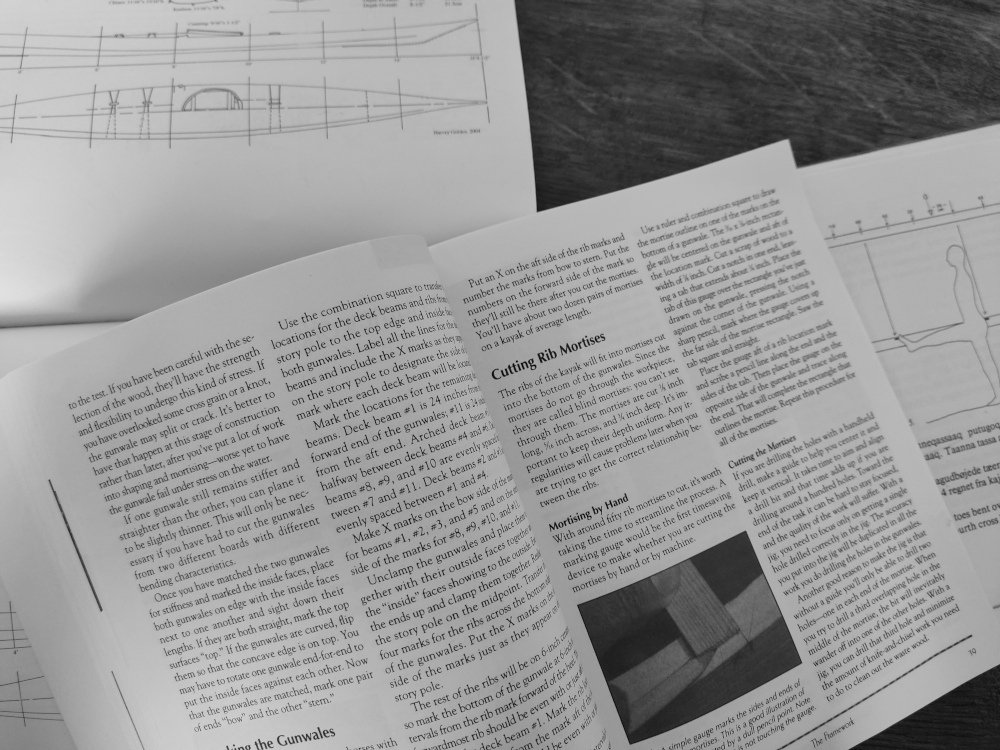
Despite many beautiful kayaks from all regions of Greenland, Central West (late 1800s through present), Northwest (Disko Bay and North, late 19th through 20th century), and East Greenland (20th century) kayaks (from ‘Kayaks of Greenland’ by Harvey Golden) were the most attractive to me. I wanted a slightly lower volume kayak that would be nice for rolling too, but East Greenland kayaks were simply too low in volume (claustrophobic) for me, so I decided to go with something between East and Central West—Disko Bay models, more precisely 1927-1928 & 1931 as my main inspiration.
In comparison to the rest, these kayaks were a bit shorter and with lower sheer. The cockpit on these models is usually aft of center, which will reduce weather cocking. Usually there’s larger space between ribs at the seating position so as not to disturb the thighs underneath.
As most Greenland kayaks had a small beam (breadth), I decided not to go with any type of floorboards or seat but with a foam pad. To get more stability because of the kayak’s width, the center of gravity should be as low as possible. Christopher Cunningham writes in his ‘Building The Greenland Kayak’: ‘Floorboards were not common among traditional Greenland kayaks. If the ribs are properly spaced so you are not sitting directly on one or resting your heels on one, the seat is fairly comfortable with just the addition of a hide or foam pad’.
Because of the hard chined ‘V’ bottom hull, it should have good secondary (edge) stability, and because of flatter ribs underneath the paddler and aft, the lower deadrise angle should improve primary stability too.
Flat (no) rocker at the stern should improve tracking and additionally prevent weather cocking, but with noticeable bow rocker, which I decided to keep, because of maneuverability and it will go over waves more easily.
Other books that I found later and want to mention because they were nice reads too are ‘Eastern Arctic Kayaks’ by John D. Heath and E. Arima and ‘Building Skin-On-Frame Boats’ by Robert Morris.
Building a Greenland kayak
Building the deck
Before setting gunwales into building forms, it’s required to check if they are of equal strength. If cut from the same plank, they should be of similar strength. It’s good to overbend the one with more strength and leave it in this position for a while.
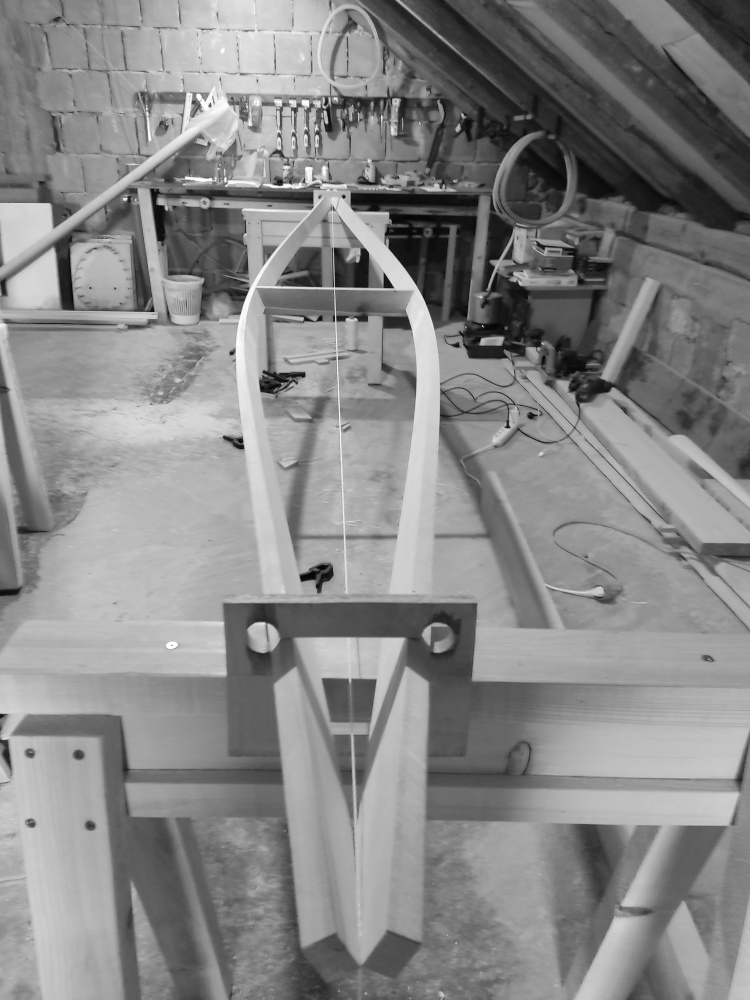
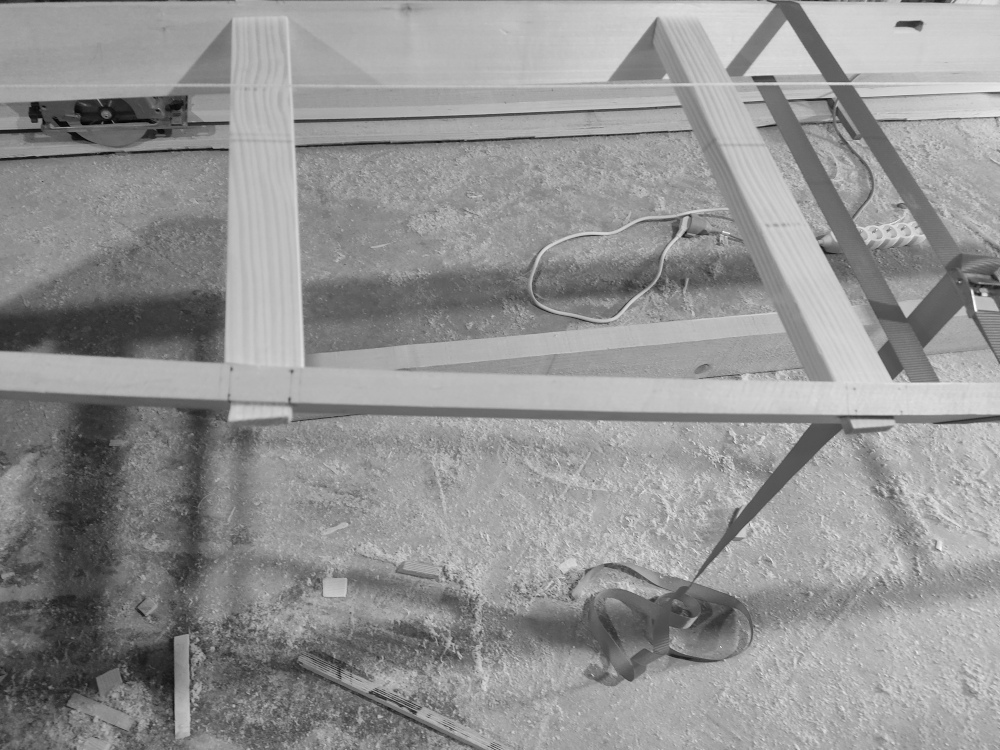
Once the gunwales are set in building forms, it’s time for symmetry work. With string attached to gunwale ends, it’s required to measure the distance of both gunwales to the string. More spots are better. In places where the distance is different, the stronger gunwale usually requires some work. Back in the old days, this was resolved “by cutting transverse grooves with a knife on the inner surface of the strake at the place where a greater curvature is needed,” writes H.C. Petersen in his “Instruction in Kayak Building.” Today, the electric planer is a great tool which can help here.
It’s very important to do this correctly, and the lengths of gunwales should not be altered. They need to be of the same length.
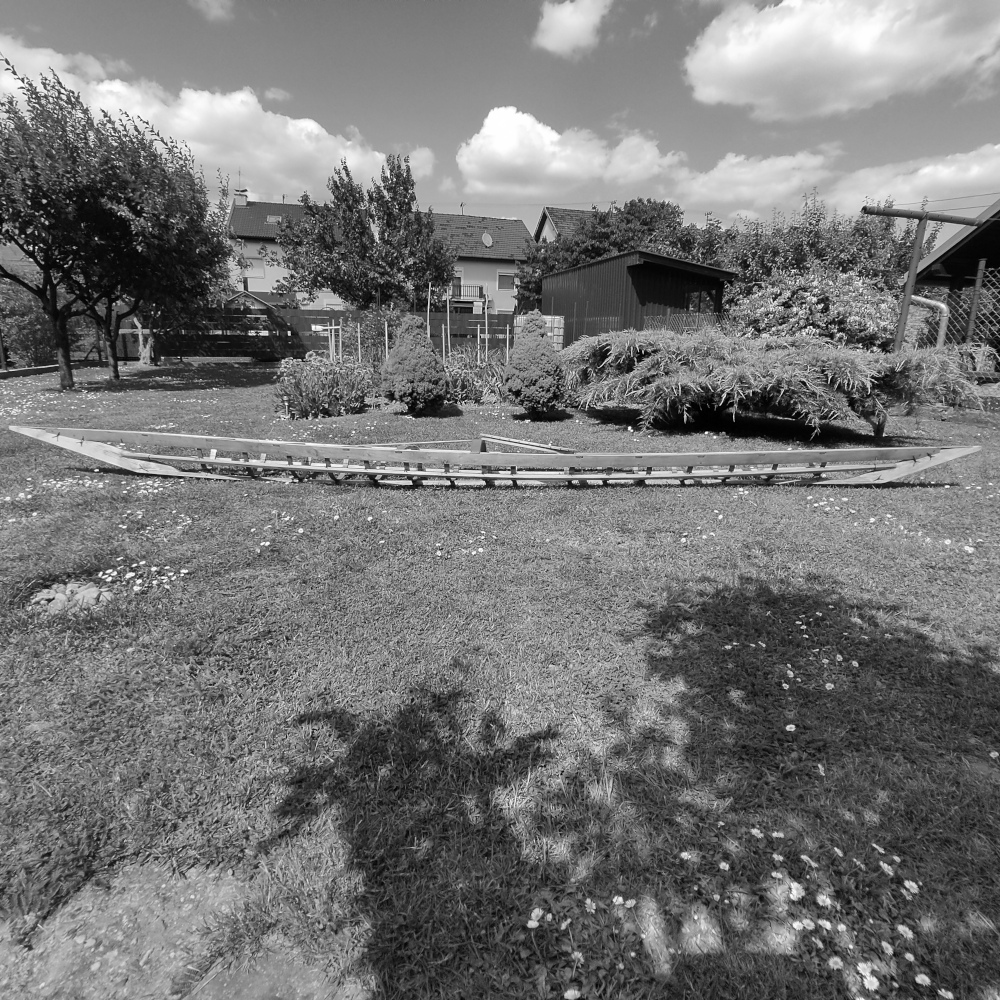
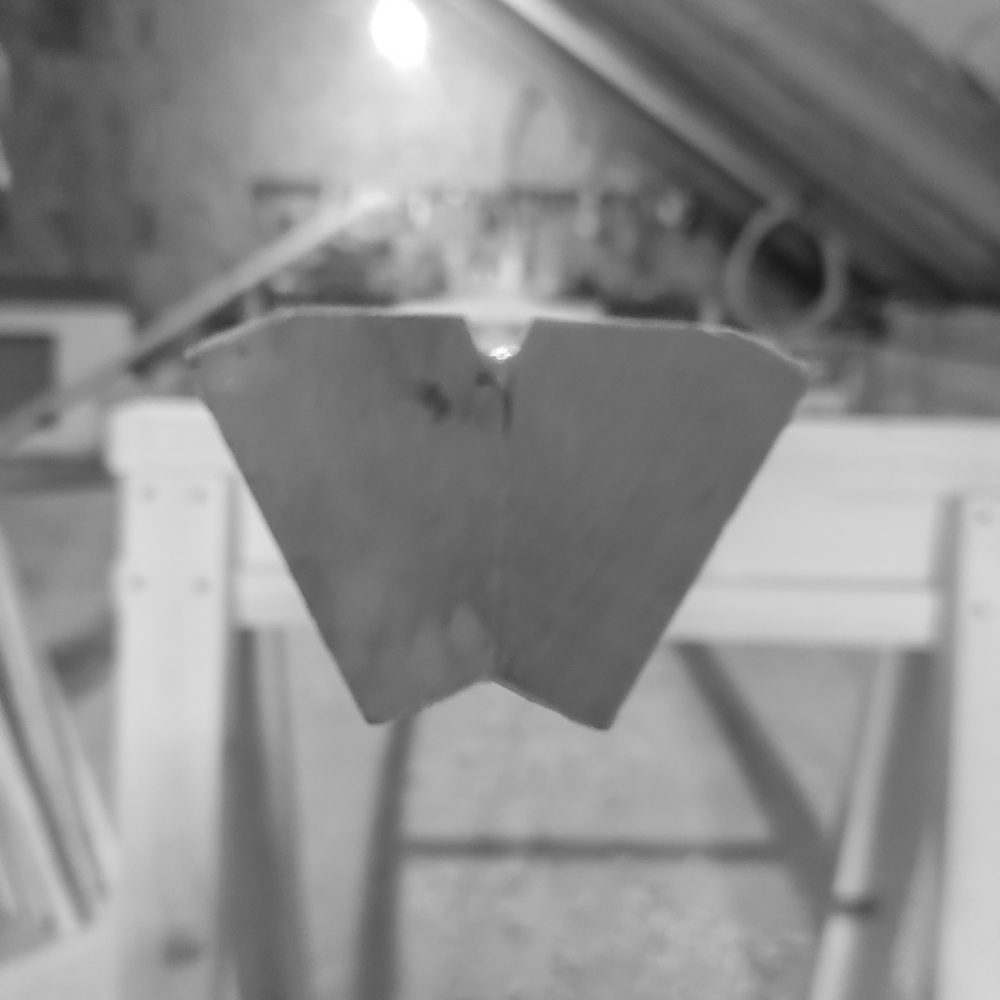
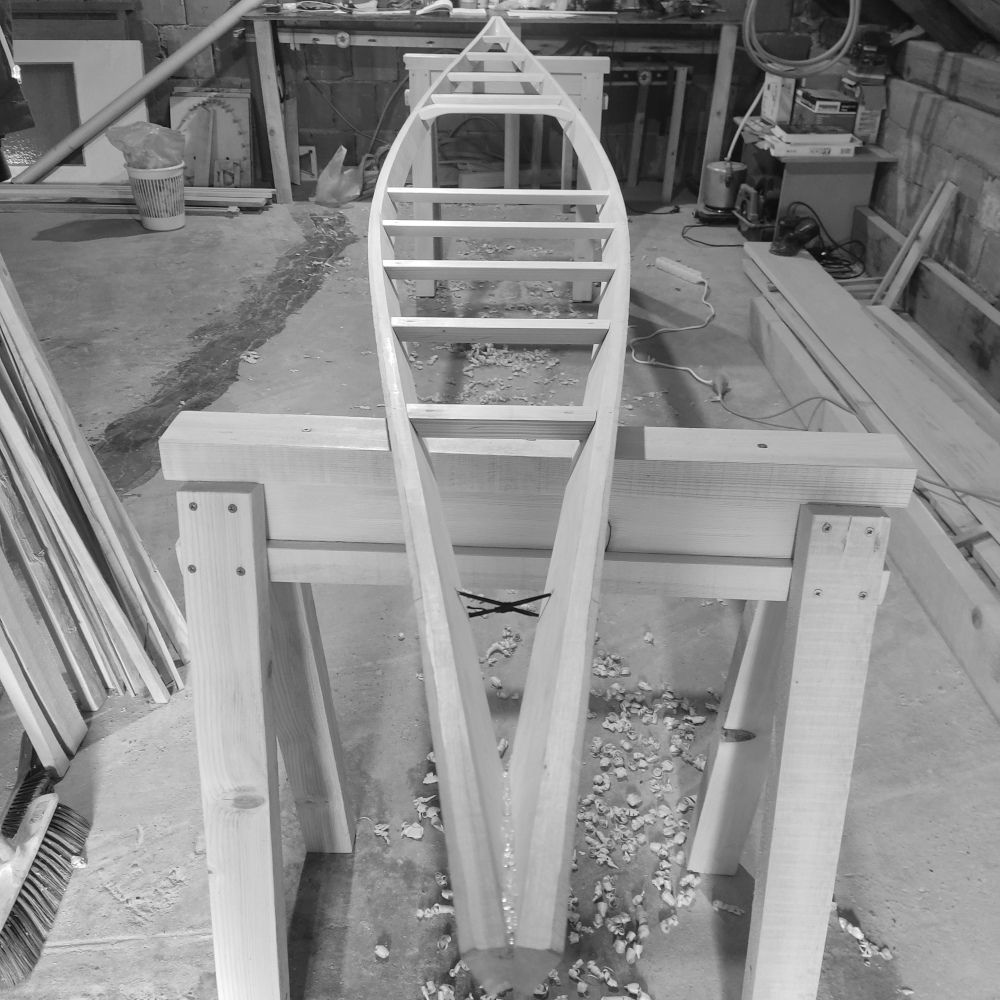
At gunwale ends where they meet each other, it’s required to go with the saw a few times in order to get good contact between them. The image also shows the beveled top of the gunwale, which I do at the end of the deck build.
Although it can be done in different ways, I usually do rib and deck beam mortises with my router jigs that I’ve built. It’s much easier this way for me.
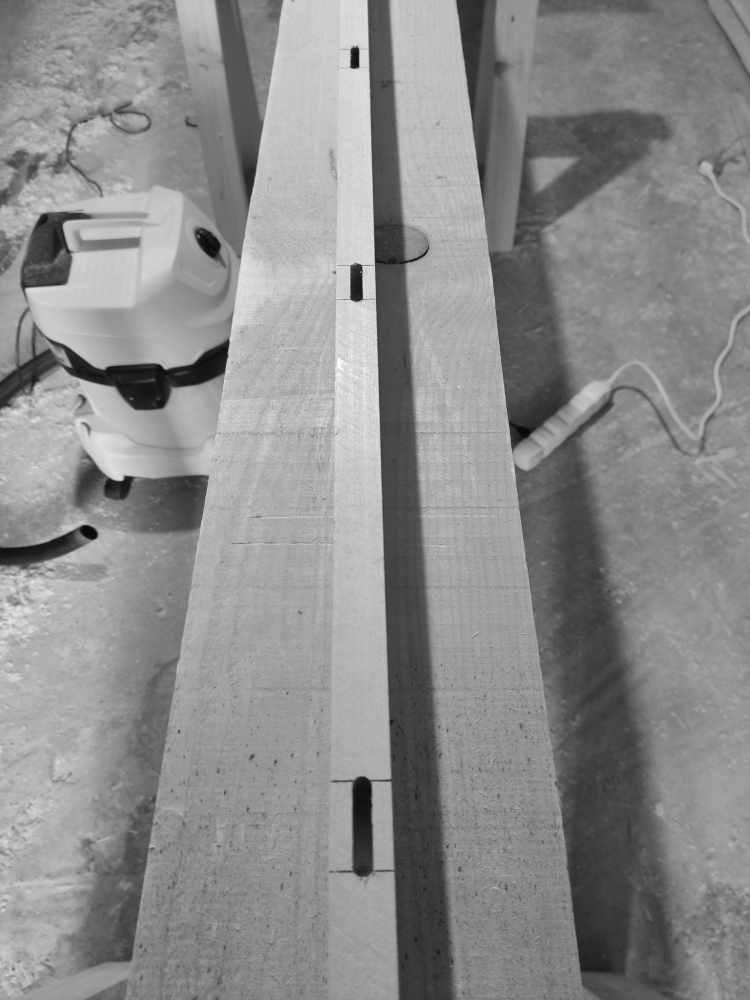
Deck beam tenons are cut with the saw. The angle of these is actually the same angle you would cut mortises for deck beams and the same angle of gunwale building forms. It’s also important to track the curve of the gunwale at the deck beam position so it fits nicely in the mortise.
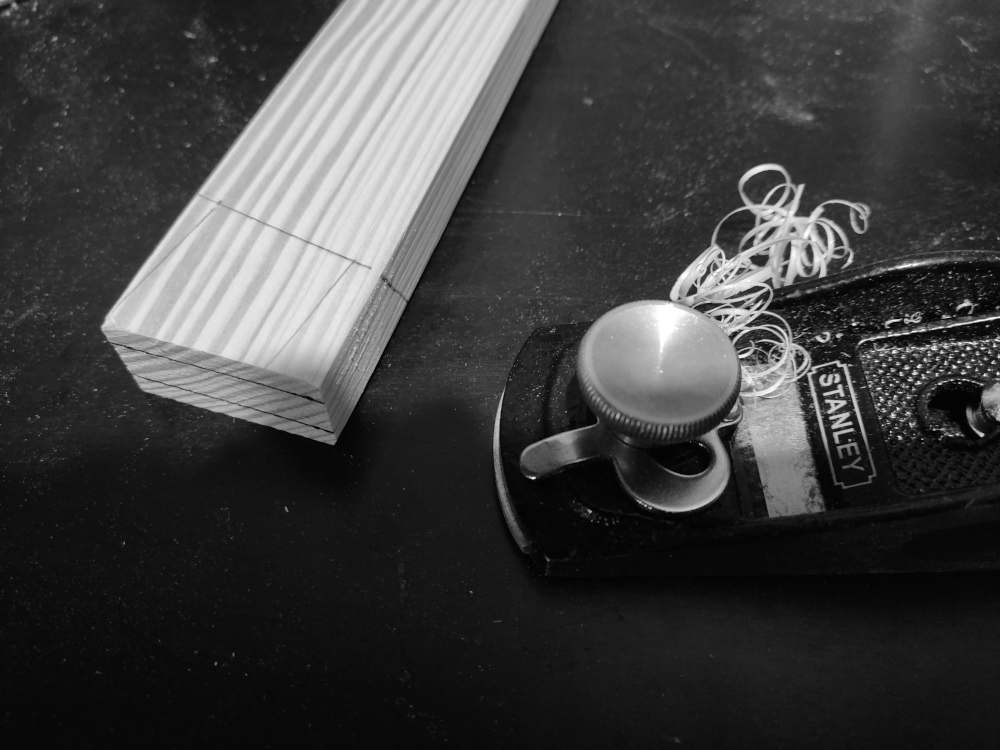
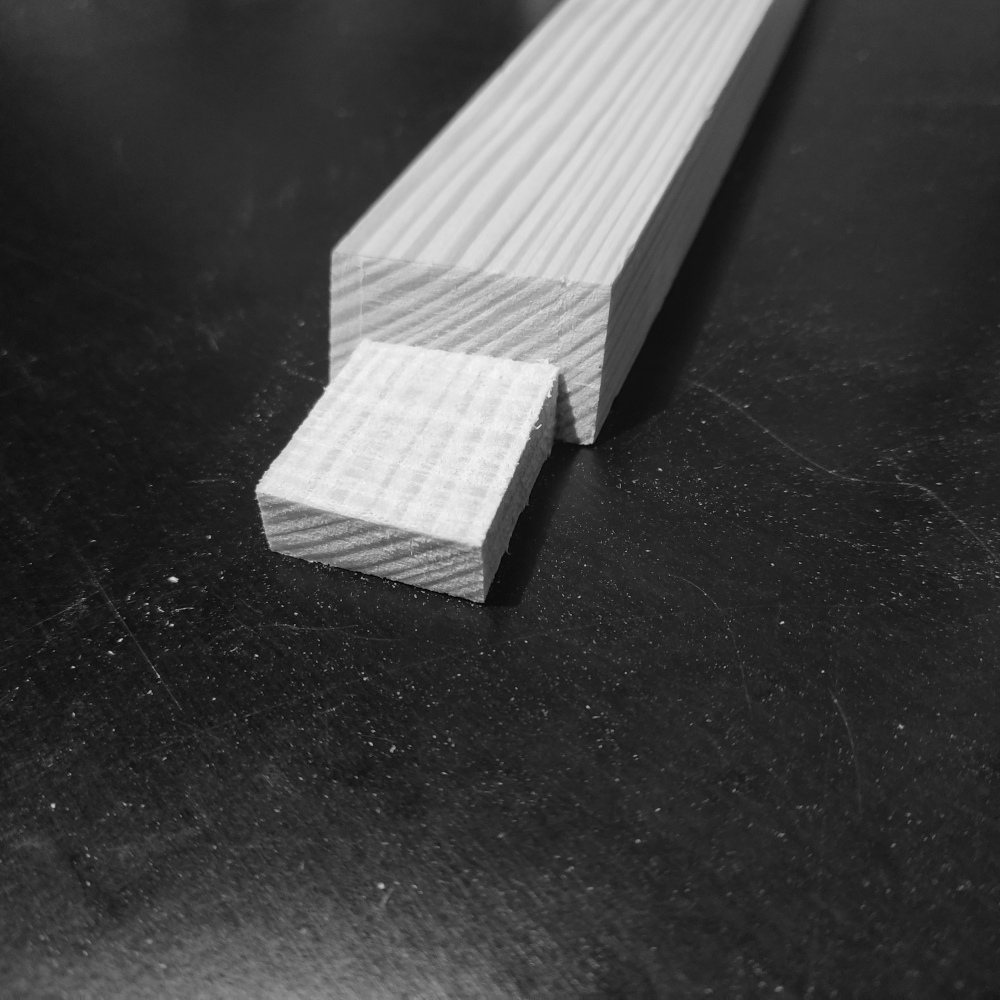
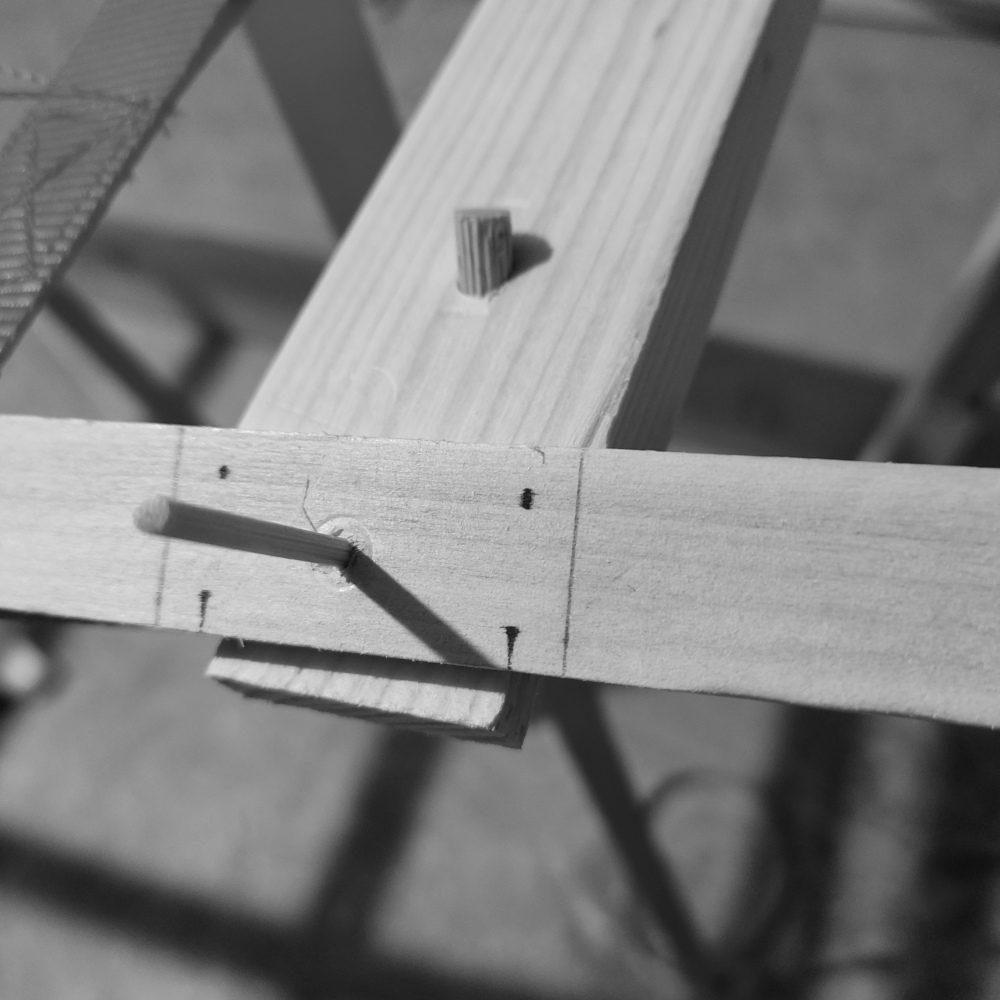
To lock the gunwales at this angle, lashing or pegging of deck beams is mostly used. I usually use pegging here: one 6mm angled peg through the deck beam and gunwale, and just in case, one 3mm peg through the gunwale and deck beam tenon. This is a combination of two pegging methods that I found in “Kayaks of Greenland” by Harvey Golden. I had some hard time finding these smaller pegs while they were the whole time in front of me. Who would know that these are barbecue sticks! Later during skinning (I’m skinning on wet), I realized these 3mm pegs can actually jump out a little bit because of moisture during skinning, which is not good because of abrasion at these places, so I actually stick with the angled pegs method only, additionally secured with smaller pegs through the gunwale bottom and larger pegs, which are used occasionally.
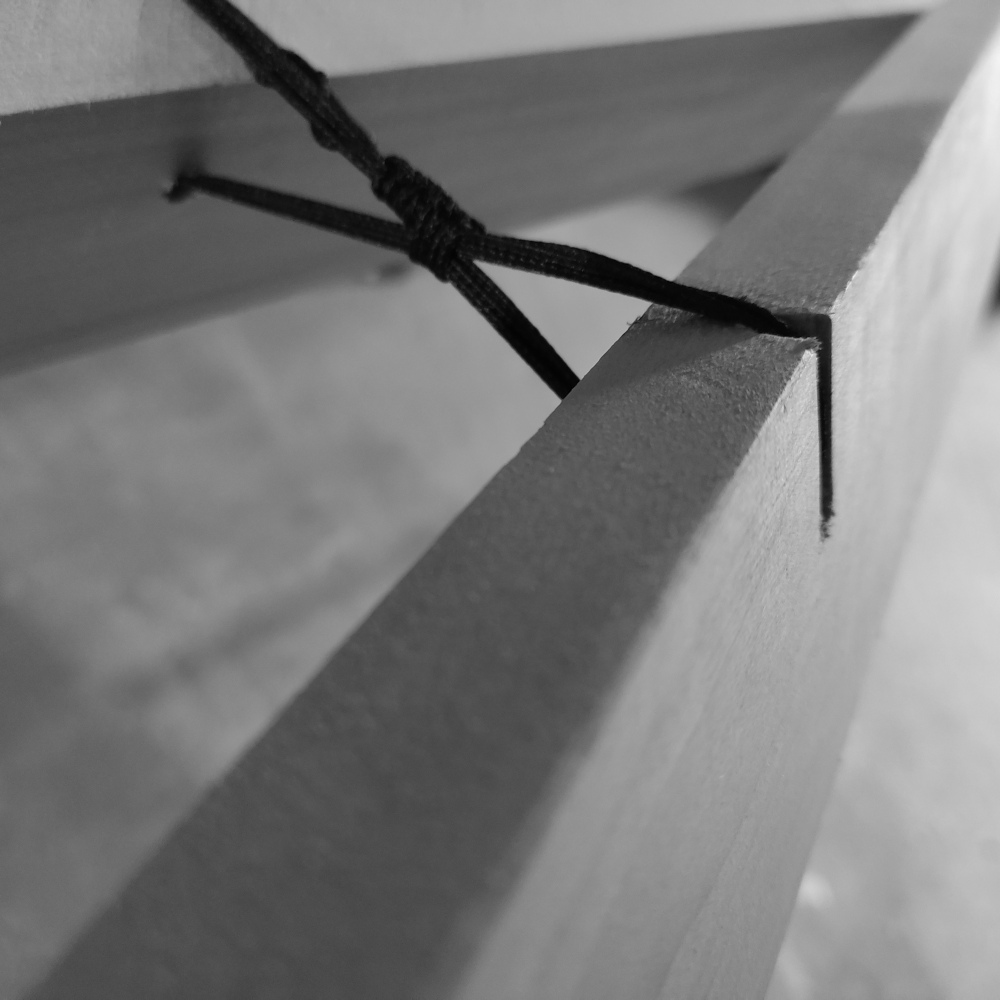
Additionally, gunwale ends need to be locked too, so it’s done with trunnels and an H-X knot. As mentioned earlier, “Building the Greenland Kayak” by Christopher Cunningham is full of great information, and this goes for different types of knots which are used. After a few runs of lashing through holes and the gunwale bottom, a few half hitches are thrown around both parts (H), and after tightening them, an X is formed. A few additional half hitches at one side are required in order to prevent this knot from loosening. This knot is very strong—so strong that if done too tight, it can actually cause wood to split. Small grooves in gunwales are done with the chisel so lashing cannot protrude into the skin because of abrasion.
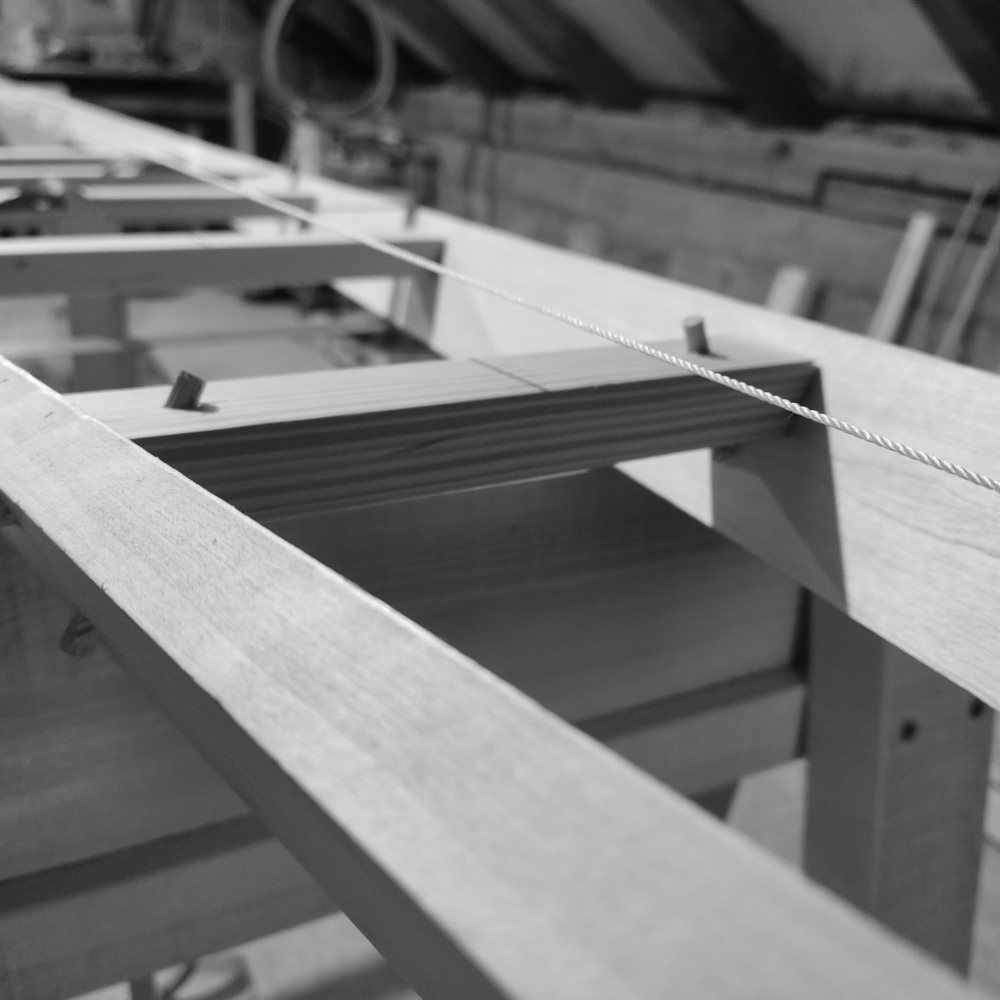
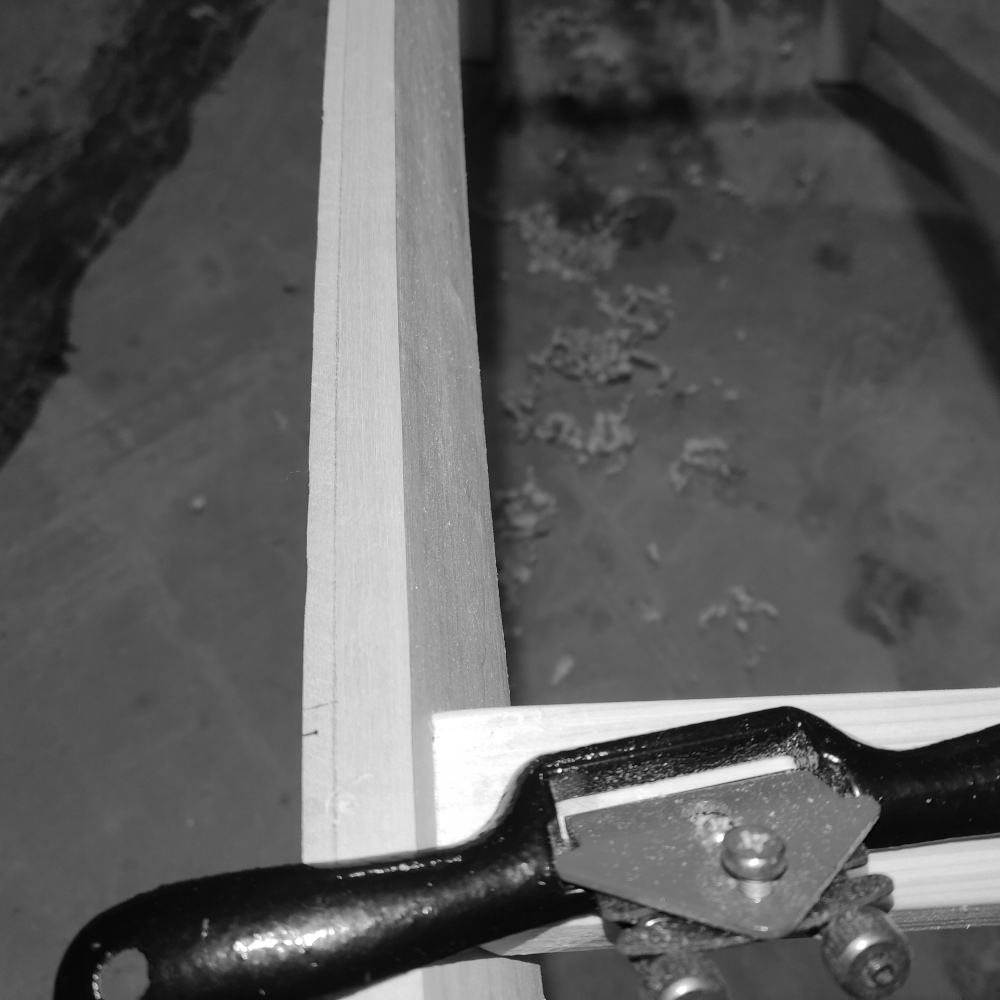
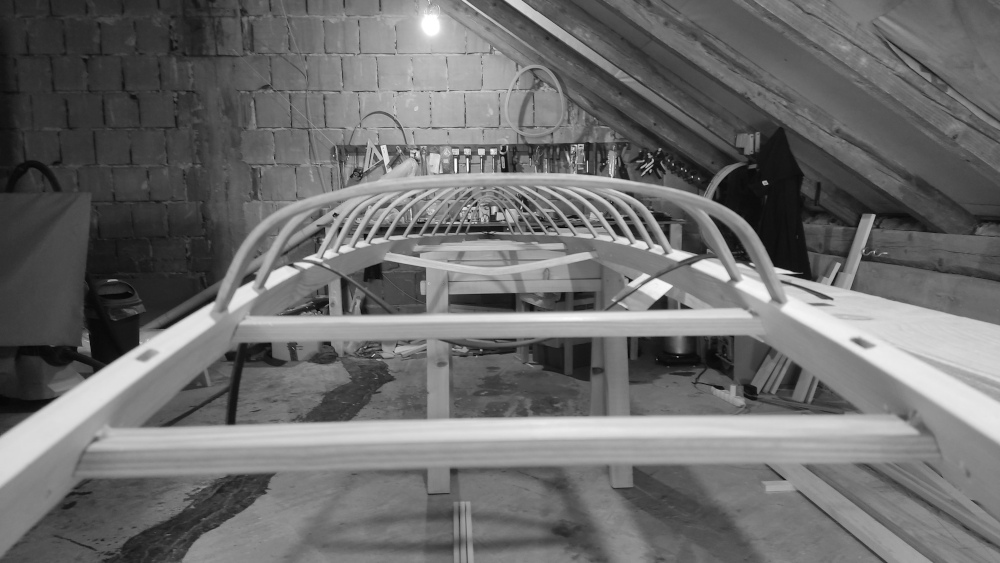
After beveling the gunwale top with a block plane or spokeshave and sanding sharp edges, the deck part of the kayak is mostly done. Deck stringers/ridges, stem plates, and masik will be added later, after the hull is done. This was my first frame actually, and now I see that I built a curved deck beam from a piece of wood using a band saw. Later I started to use steam-bent Slavonian oak for it. At first I was annoyed because there is always a bit of wood spring-back, but with a few hits and misses I got the right shape of my steam bend form, so front deck stringers nicely sit on the masik/curved deck beam. Oak is very strong, so I actually reduced its thickness for easier bending and a little bit more leg room.
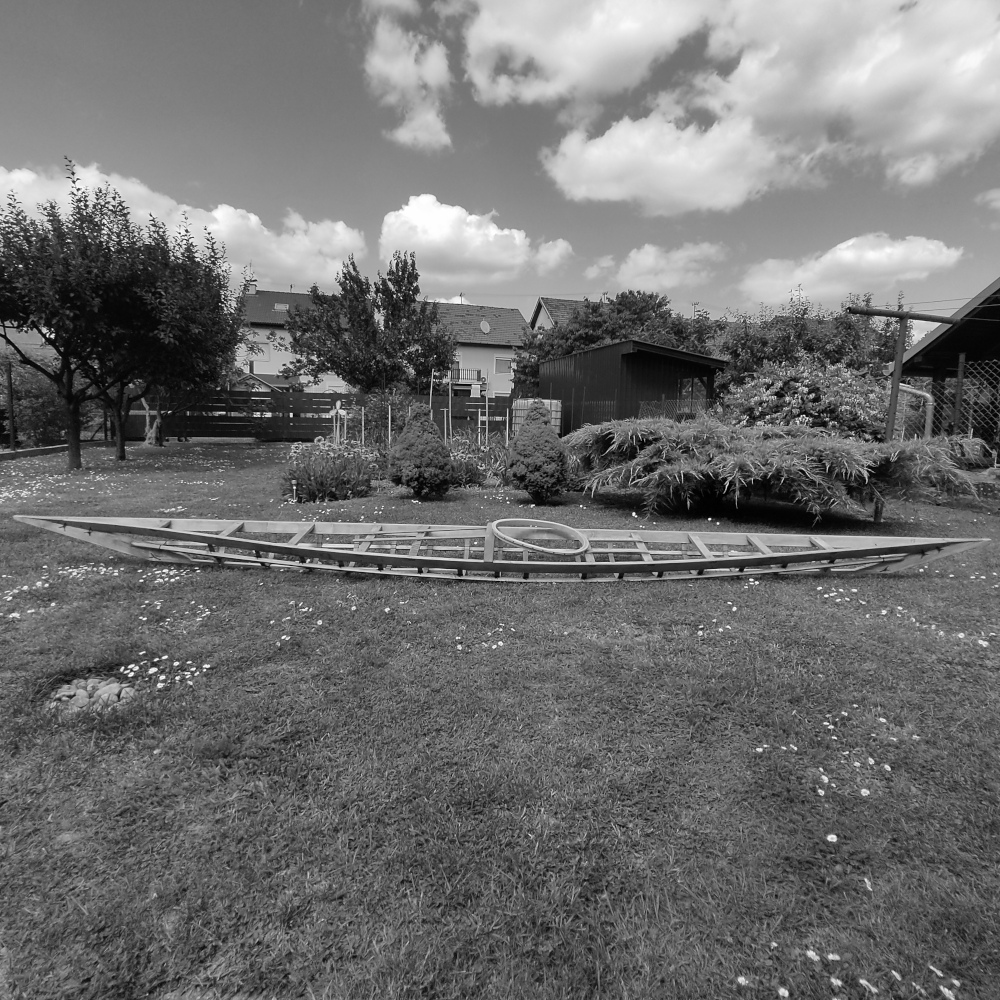
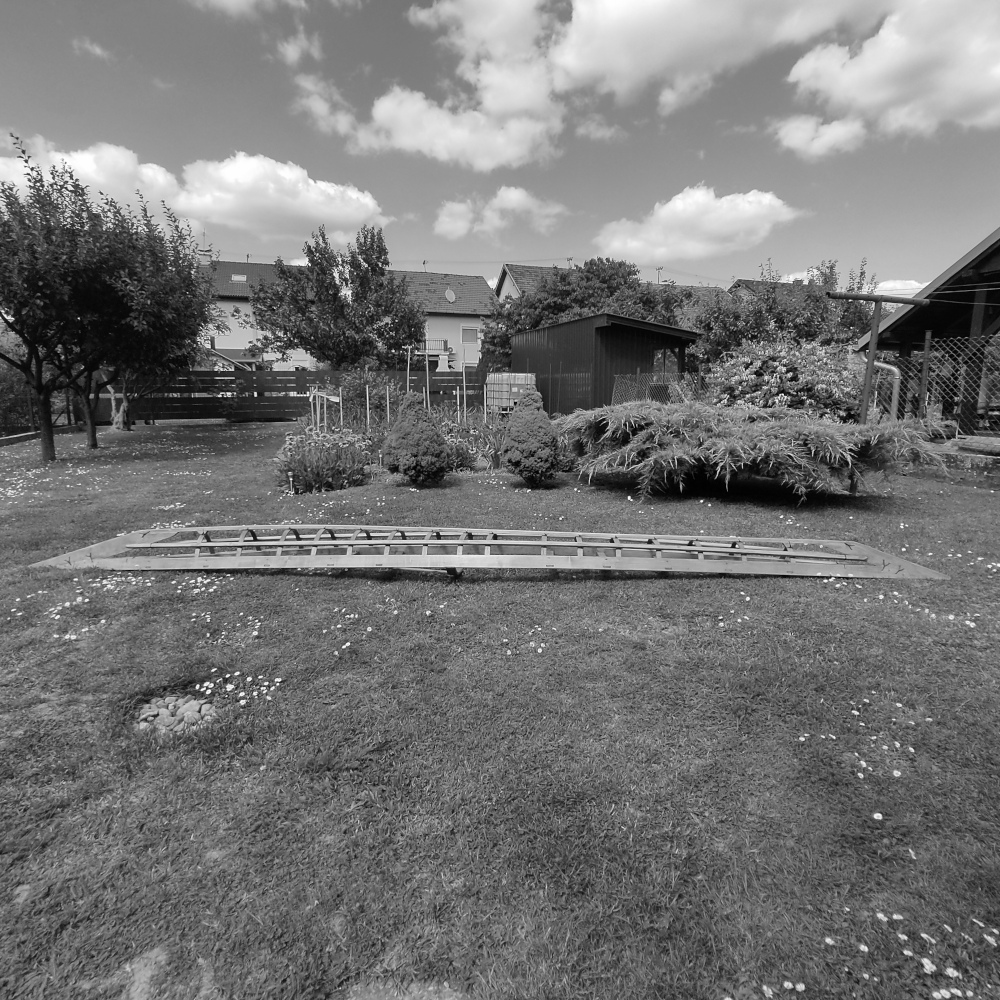
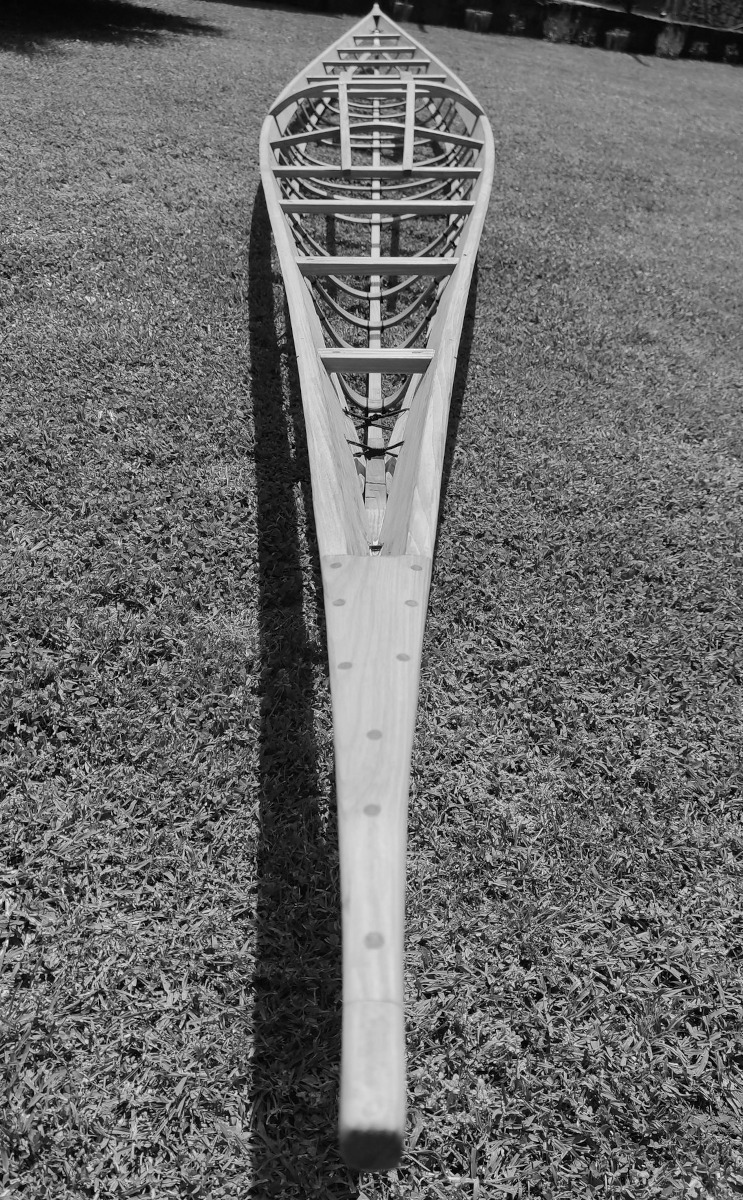
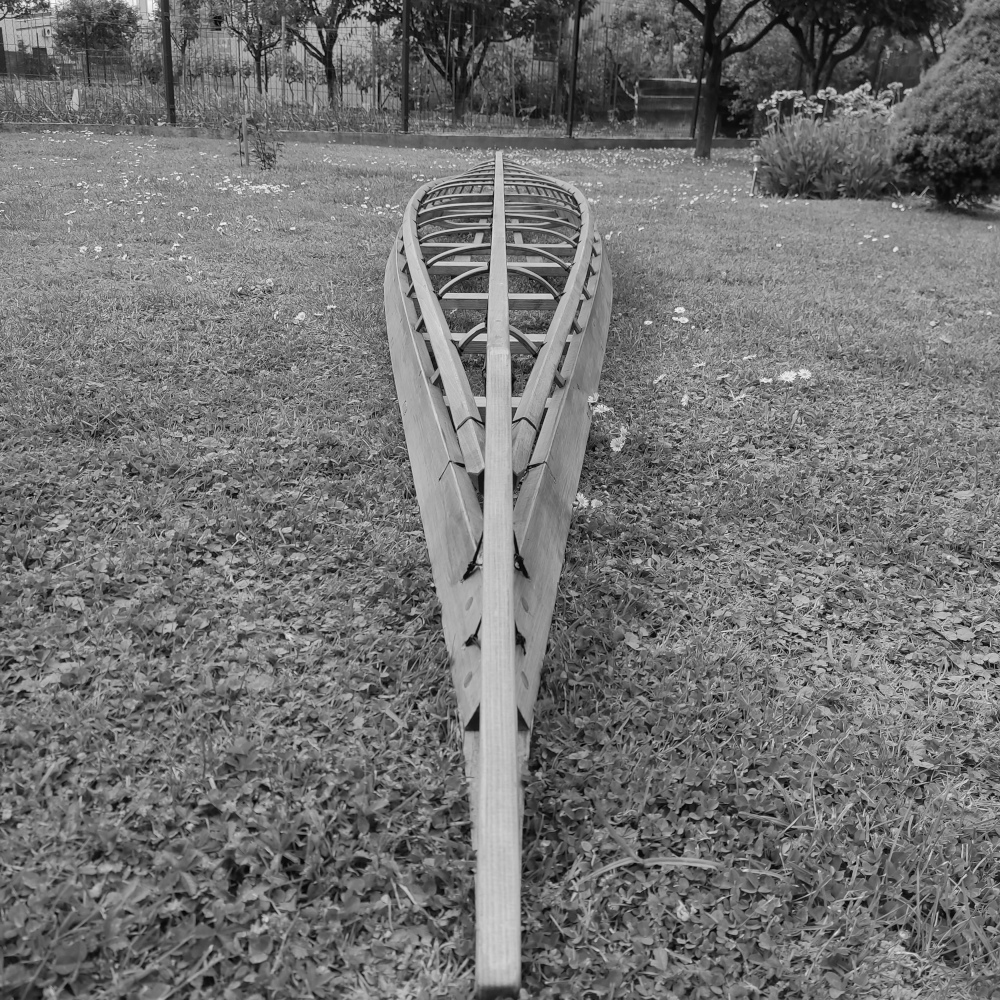
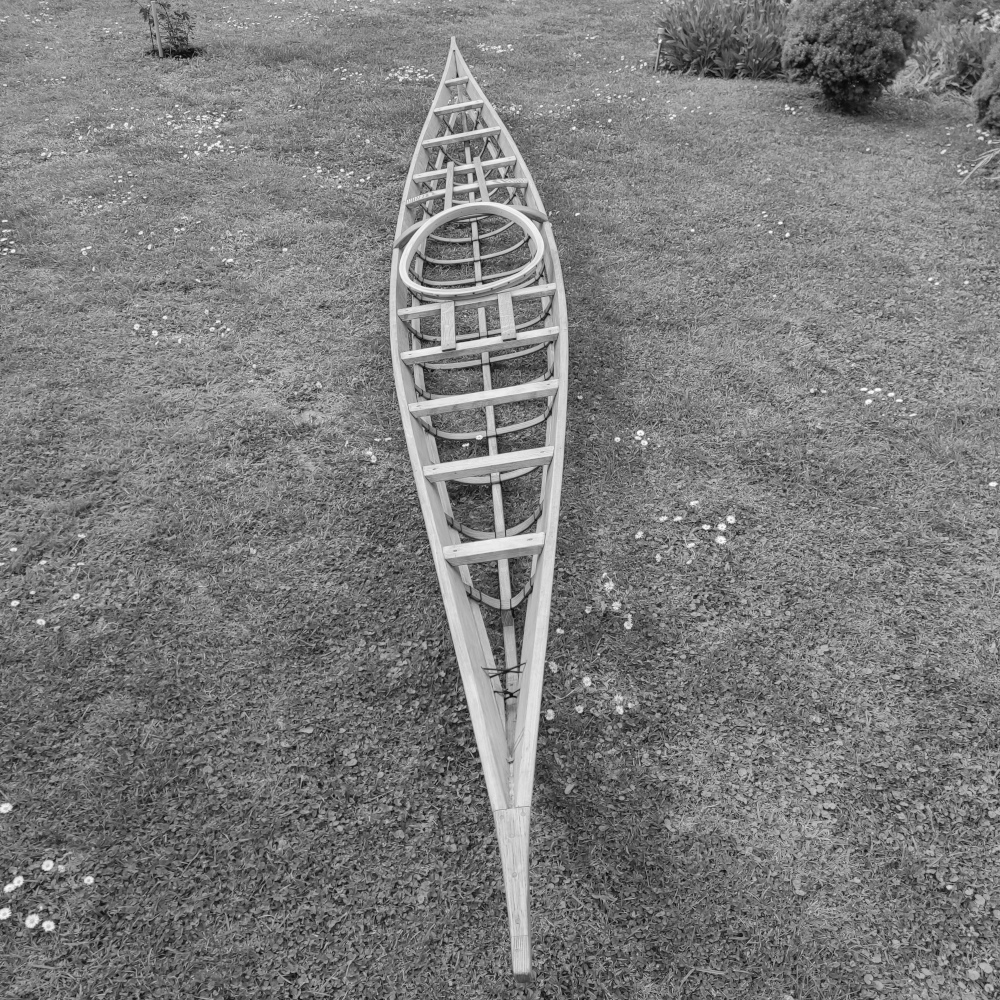
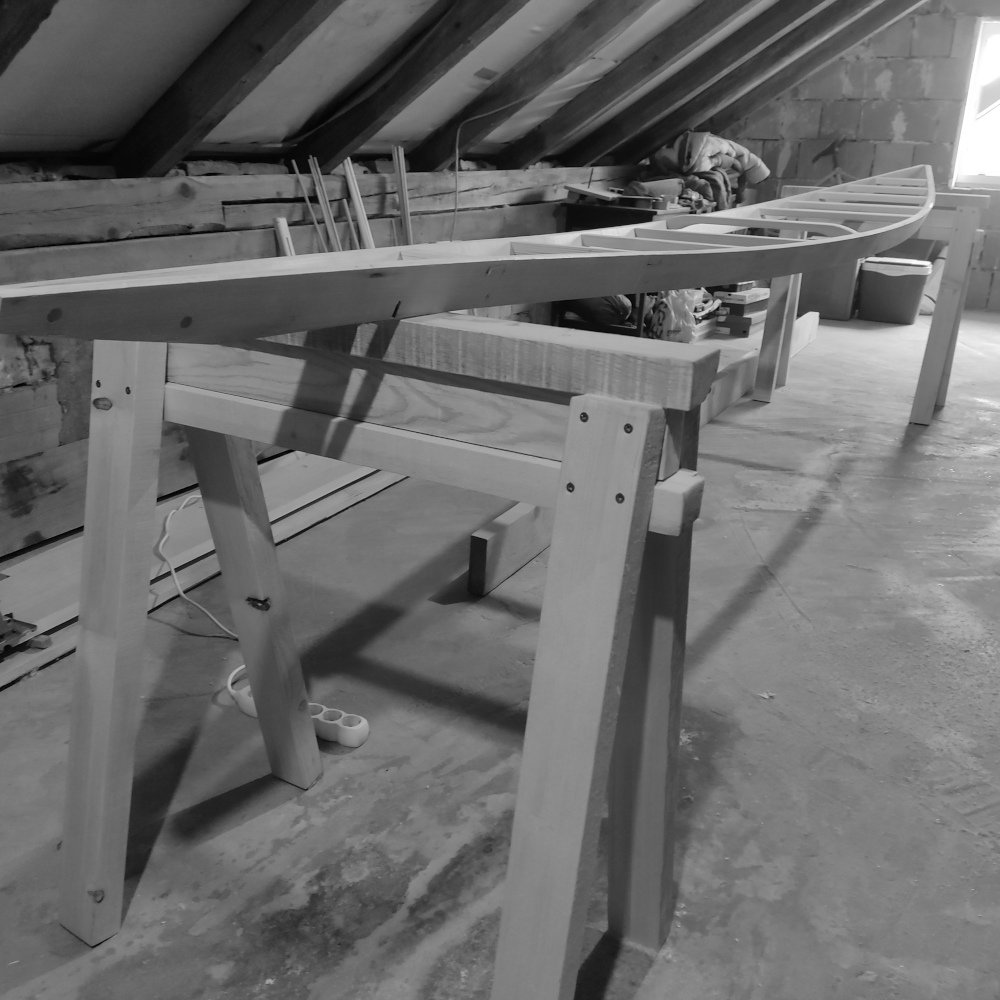
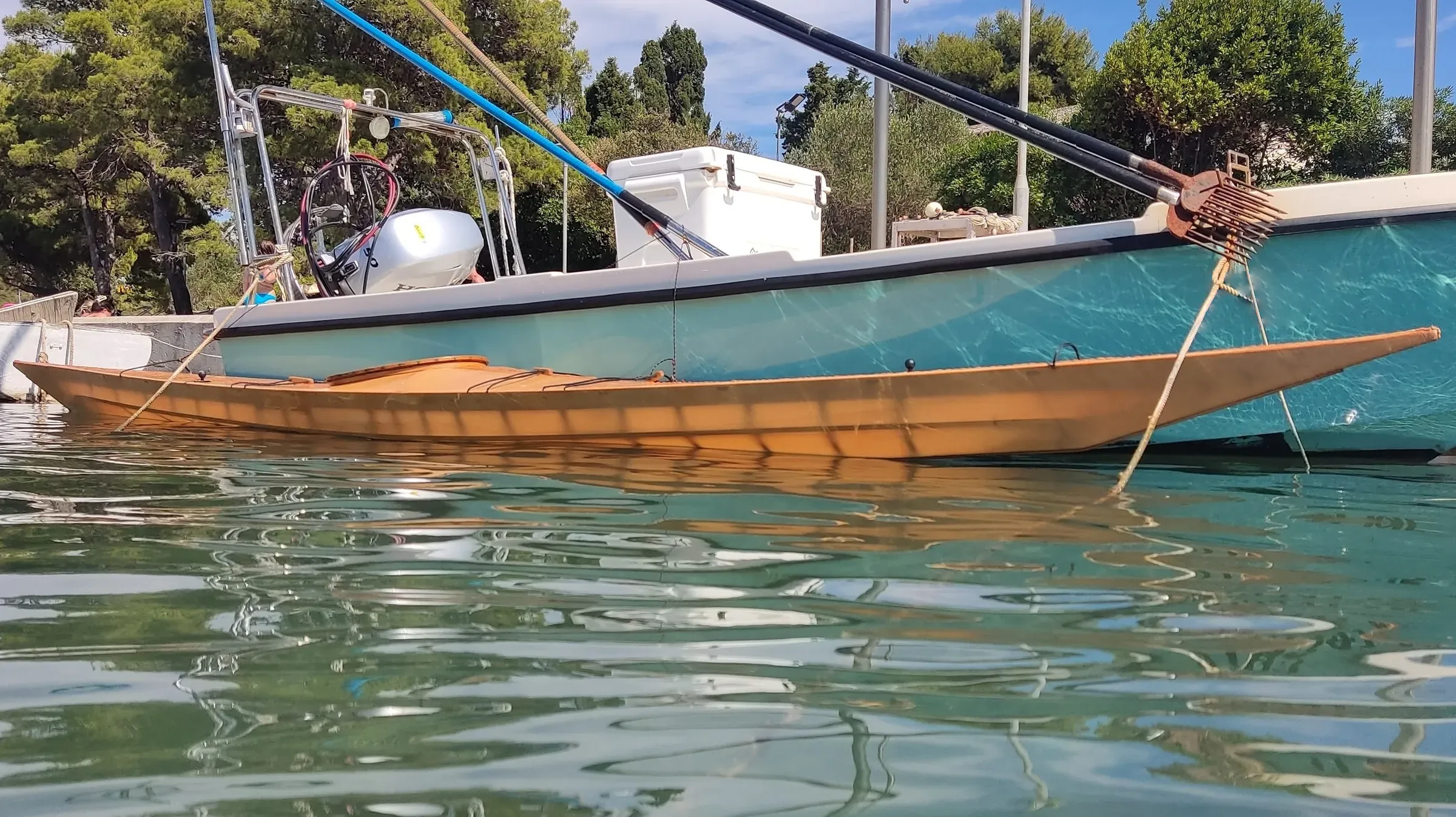
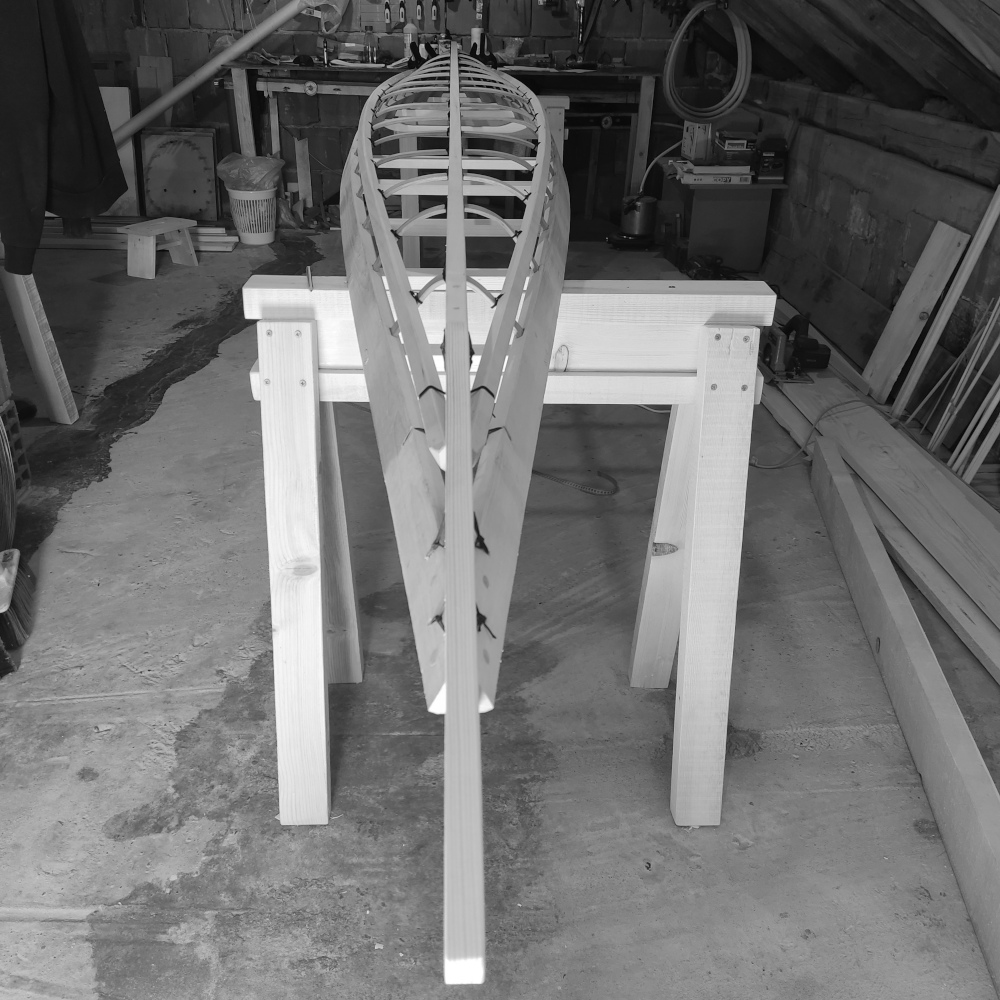
The first image shows the sheer line and stem shape. This naturally created low stem profile by gunwale flare is something that is the most appealing to me. Although more found on East Greenland kayaks, I decided to leave it this way. On my later builds, I decided to add more height to the bow and a bit more height to the stern, closer to the original, in order to get more of this West Greenland type (last image of finished kayak, actually my last build: 520cm length overall, 53cm beam, and 12kg weight). This higher bow will be a little bit more affected by wind, but because of additional buoyancy, it will also recover a little bit more quickly if it’s submerged by a wave.
Building the hull
As mentioned before, I knew this would be a longer trip through kayak hull and ribs because I did not work with any type of kayak plans, so I needed to make my rib measuring system. Something very helpful was again “Building the Greenland Kayak” by Christopher Cunningham, in which he uses “ribs” made of wire in order to see how the ribs will look. Once I did it and measured wire lengths, I noticed that the statement by H.C. Petersen in his “Instruction in Kayak Building”—”the width of the kayak at the position where the rib is to be placed + 4 fingers on each side”—principle was very true in order to get a nice shape of the hull. With exceptions of course, especially when you start approaching the stems in order to get desired rocker. This “4 finger” constant is also adapted because of different gunwale size and desired depth of the kayak.
For rib stock, oak or ash are preferred. I’m using mostly green oak, and if I can’t find it for some reason, I’m using kiln-dried oak. Kiln-dried oak would need a few days of soaking in water before you can do the steam bending; otherwise, you’ll break many of them. Believe me! :) Once the ribs are bent into shape, I peg the ribs with small wooden pegs. I’m not sure I will do this on my next builds because there is no way that a rib can jump out from its mortise after frame lashing, not to mention the additional force by the skin. Harvey Golden in his “Kayaks of Greenland” writes, “Ribs are not always fastened into their mortises, but when they are, the common method seems to be via small pegs…”
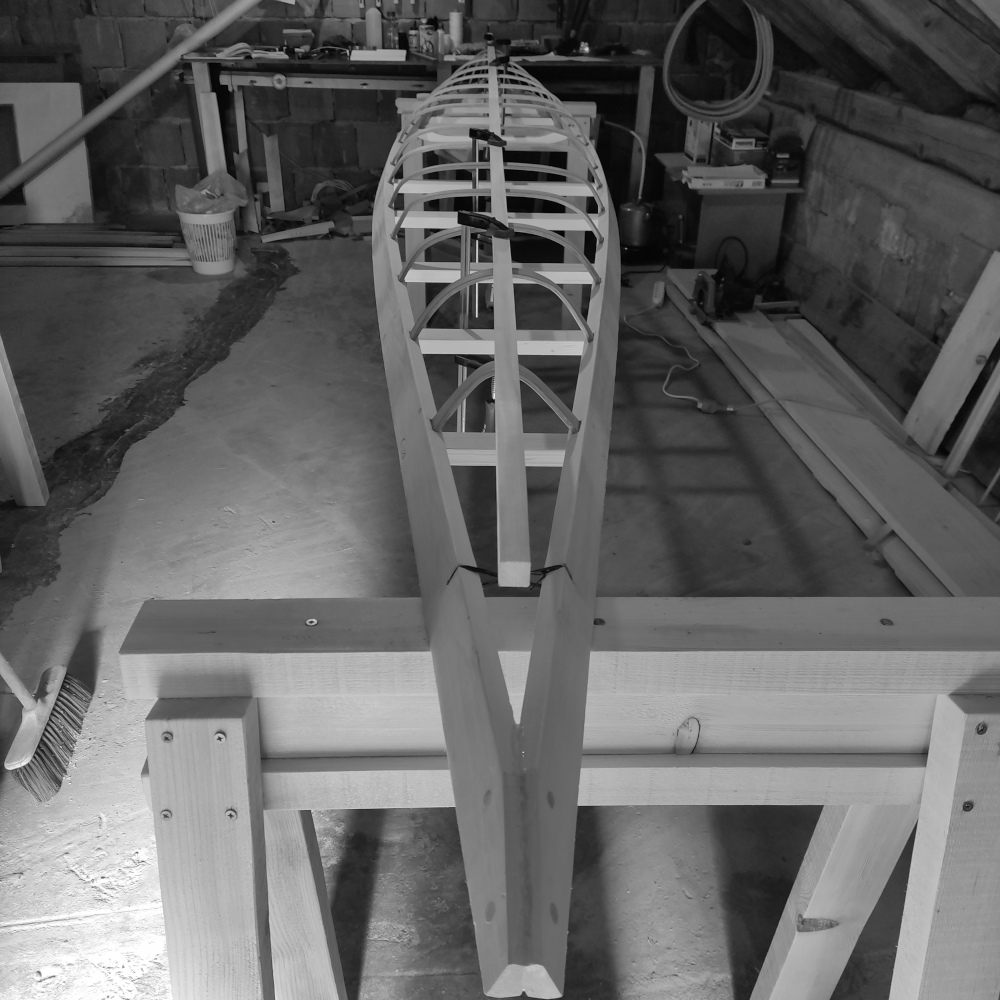
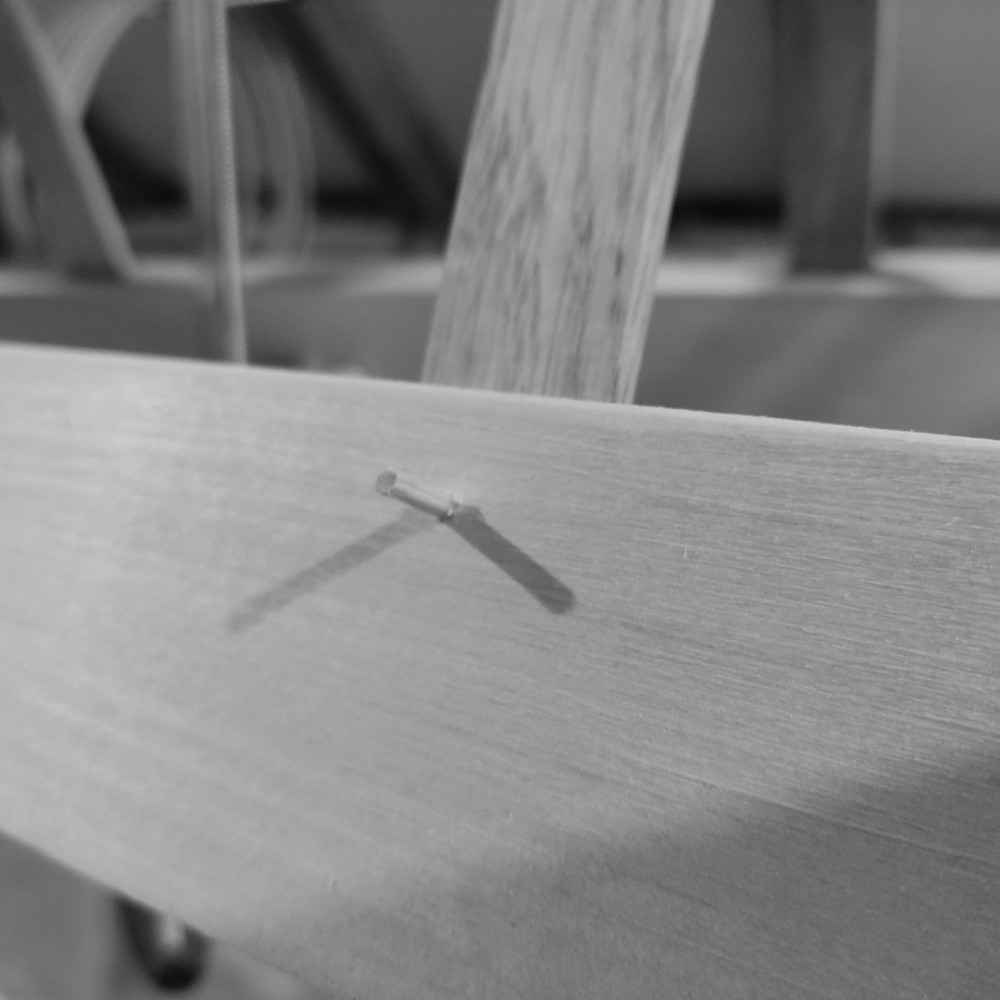
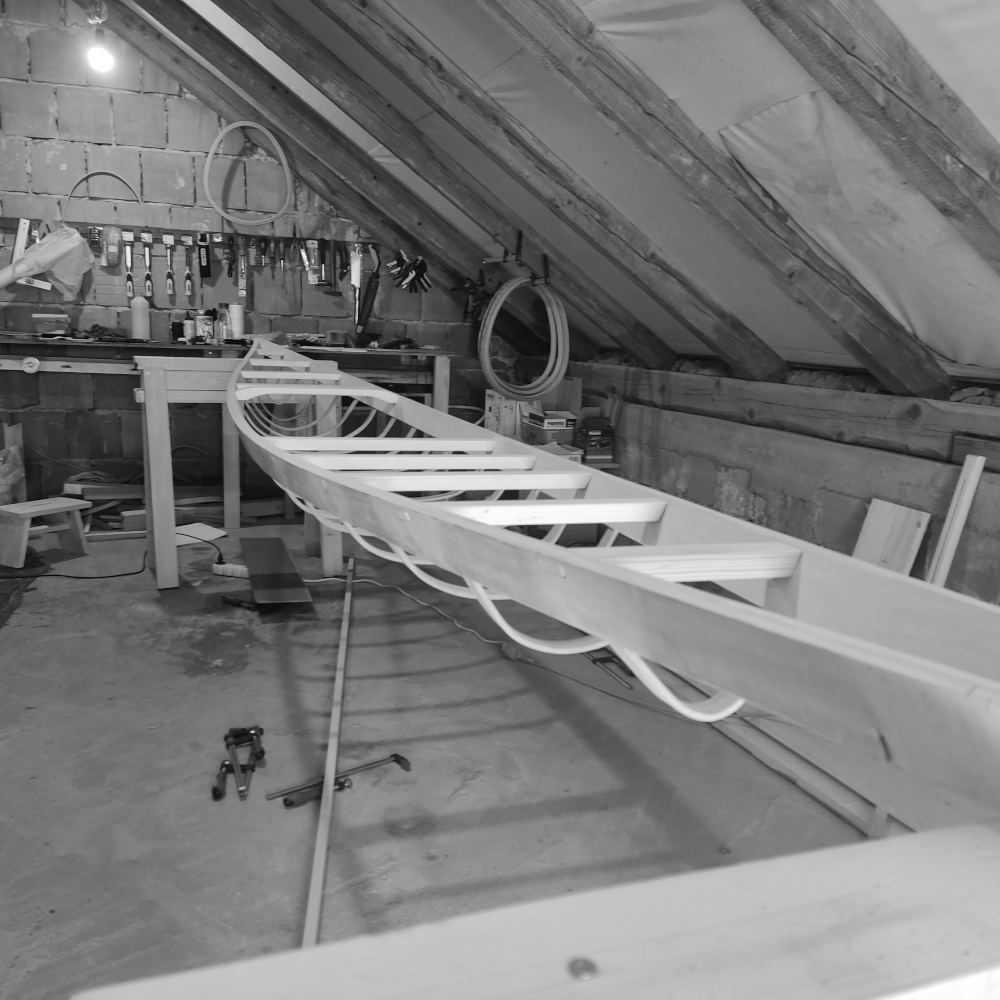
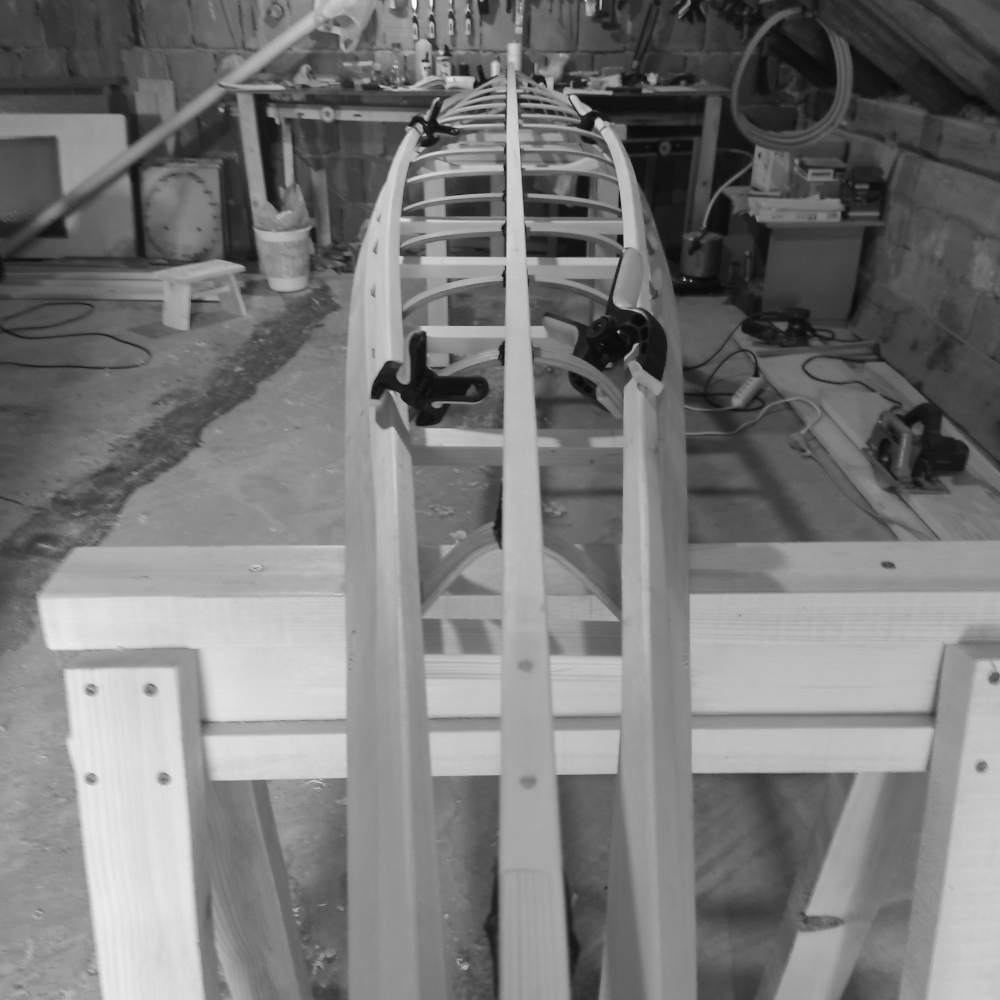
Attaching stems. A fairing block can be seen on the last rib between the keelson. Although perfectly normal for skin-on-frame kayak builds, my rib system constantly evolves from frame to frame so I’m using less of it, and this frame was my first actually. The last rib got a slightly different position later, away from the stem, in order to get more height without cracking the rib, because very sharp bending is required here.
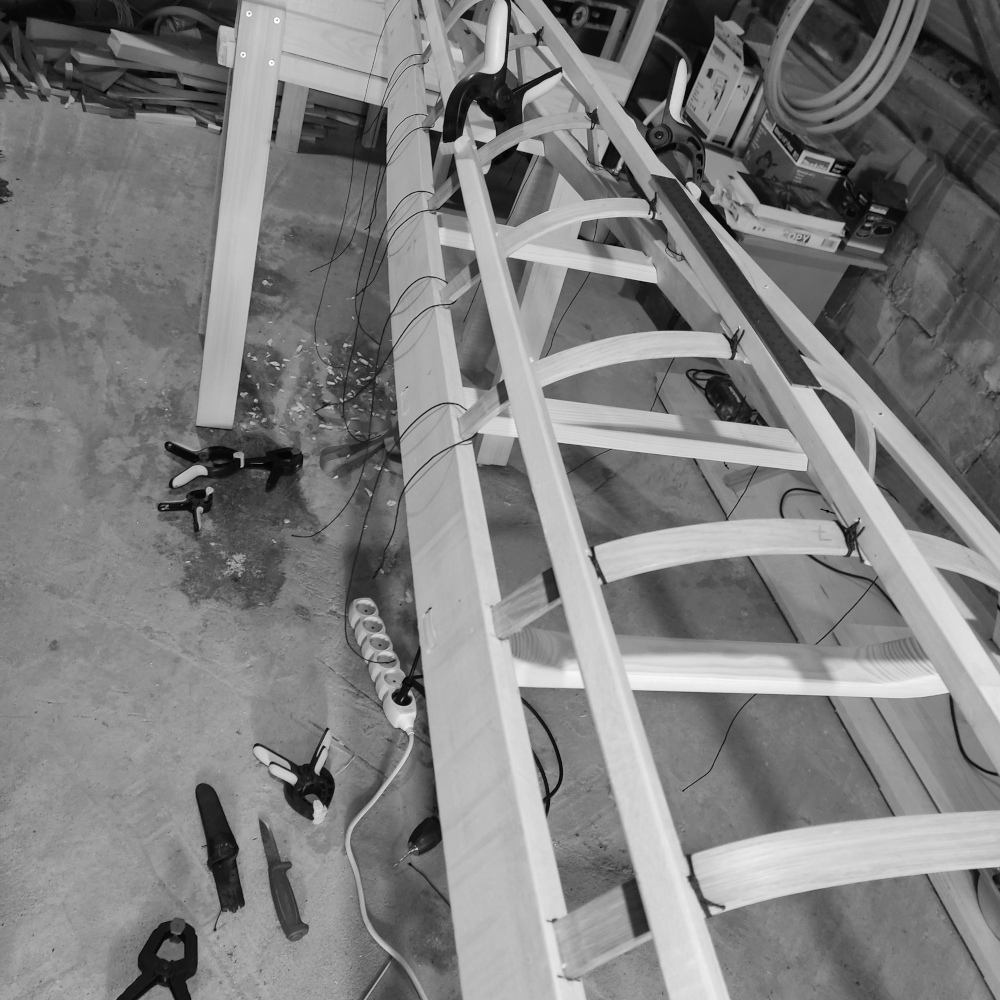
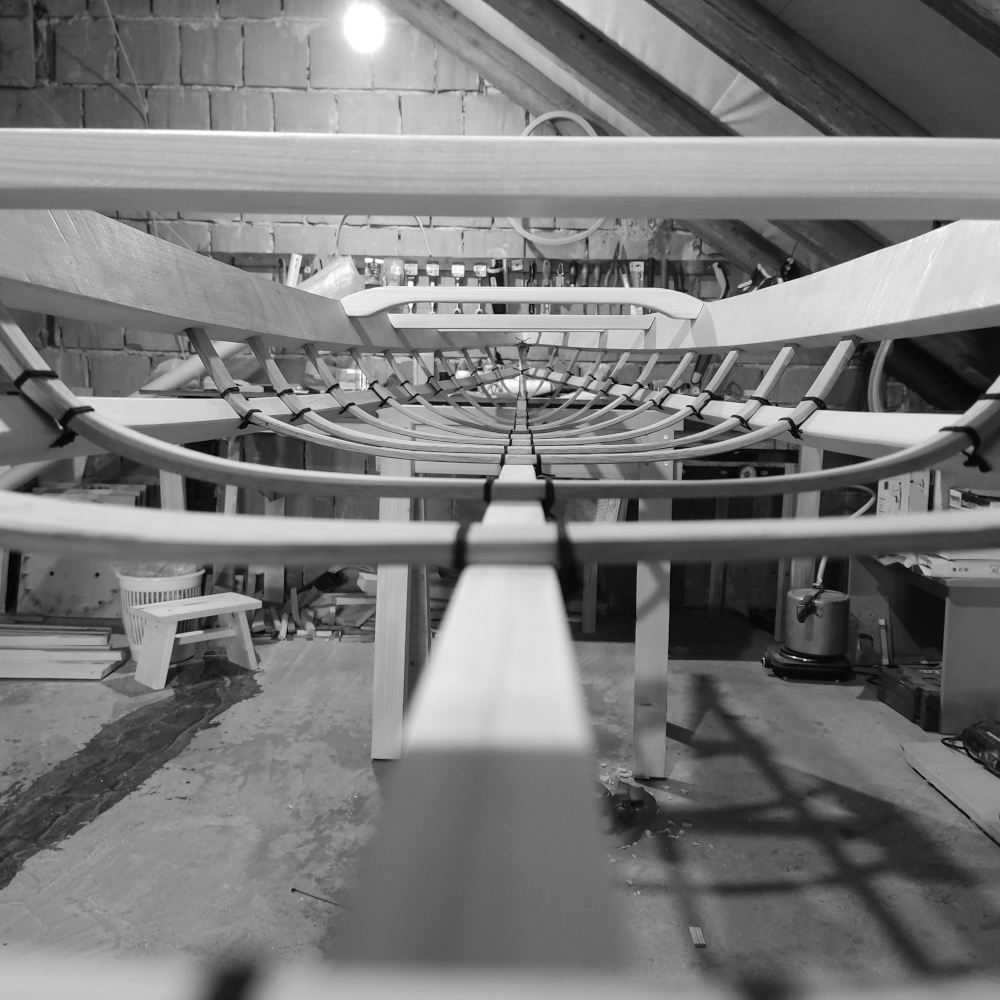
Rib lashing. Back in the days, sinew—made from animal tendons—was used and was very strong. Artificial sinew (waxed polyester thread), which is mostly used today, is not so common in Europe. I’m using very strong polyester thread of 1.3mm which is used mostly in sea fishing as a main line in longline fishing. Breaking strength is around 60kg. I lash every rib separately—a lot of work, I must say. Maybe I’ll switch to continuous lashing, as both methods are used in Greenland kayaks, although continuous lashing was more common. The thread does not go around the keelson and chines but through the hole at every rib position so the thread does not protrude into the skin later. This would not be good because of abrasion. In ‘Kayaks of Greenland’, Harvey Golden writes that “Lashings as a rule do not go around the outside face of the keelson or chines. Instead, the lines pass through holes drilled through the respective pieces.” (p.66). The knot is actually V-Y, which I tie at one side of the keel with a few half hitches. With two loops around ribs, I guess it looks nice from the top.
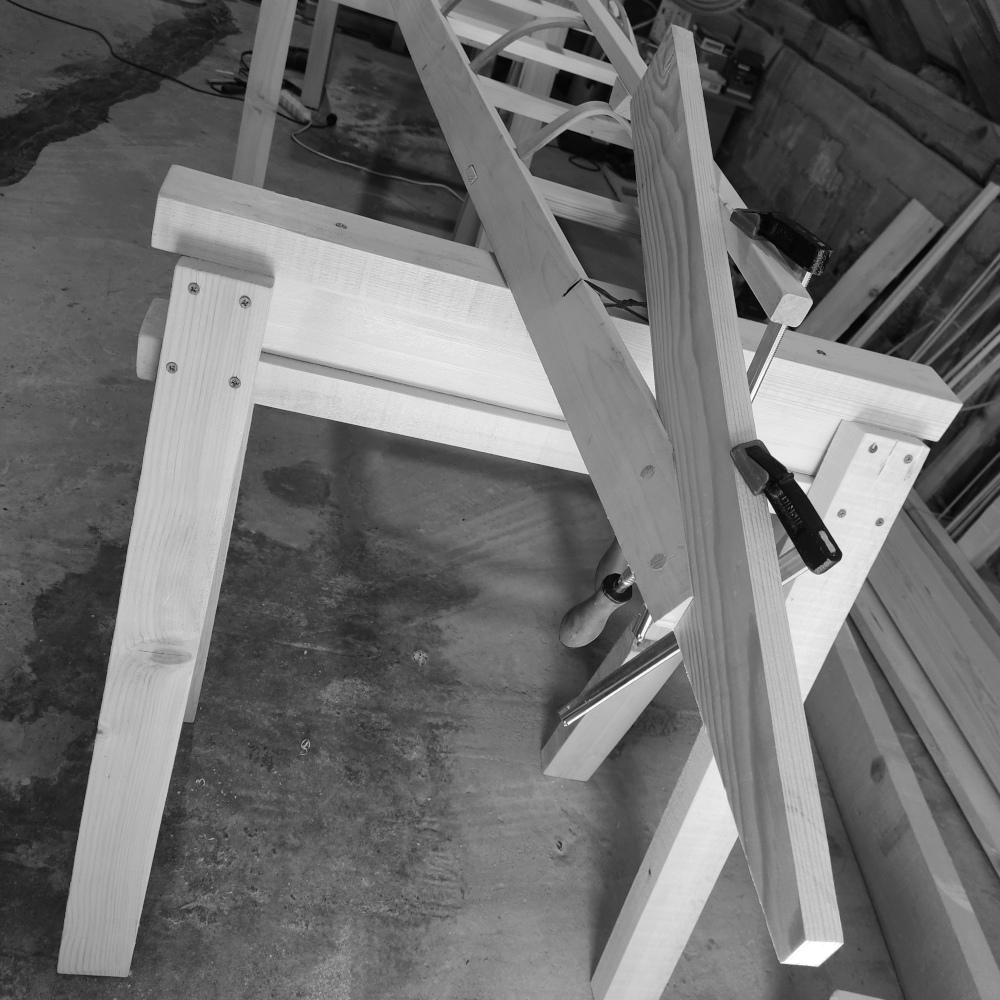
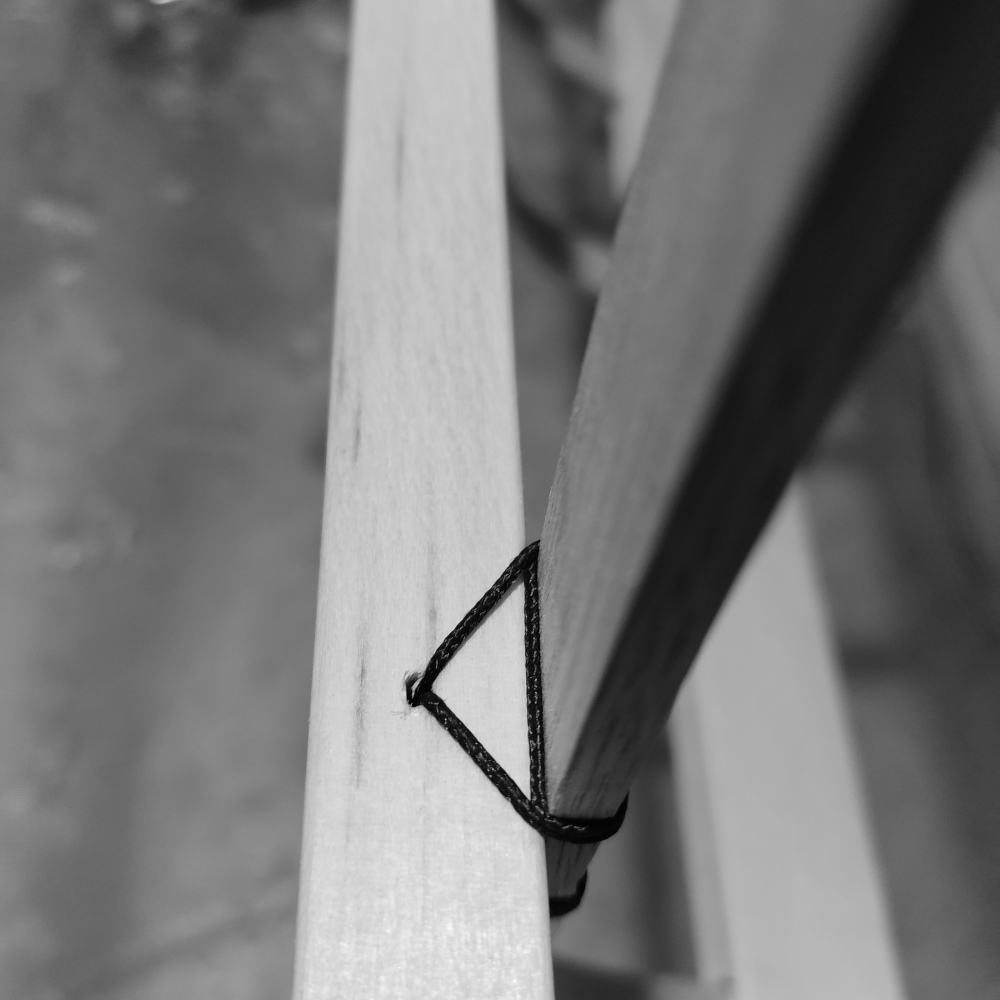
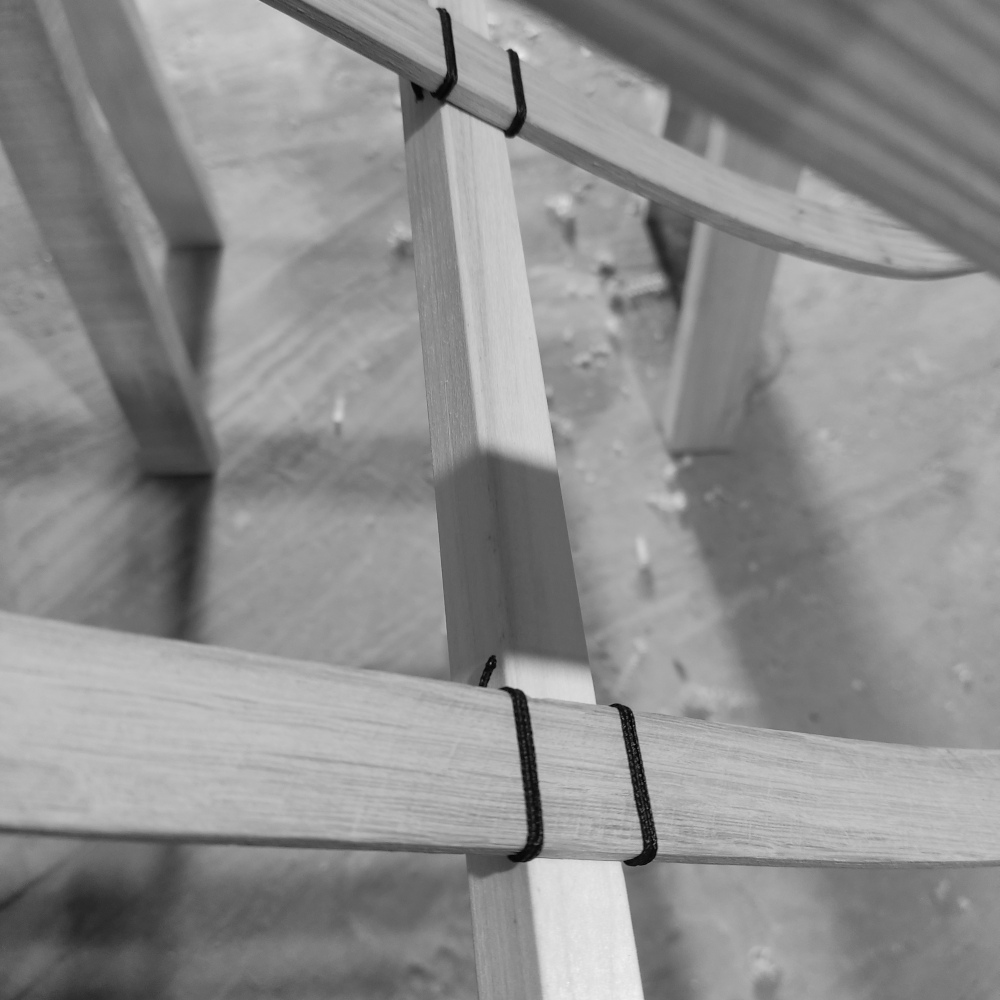
The hull is nearly finished. I go further with lashing the chines, checking if the keelson is straight, measuring the correct position for the chines, and doing some small adjustments if required.
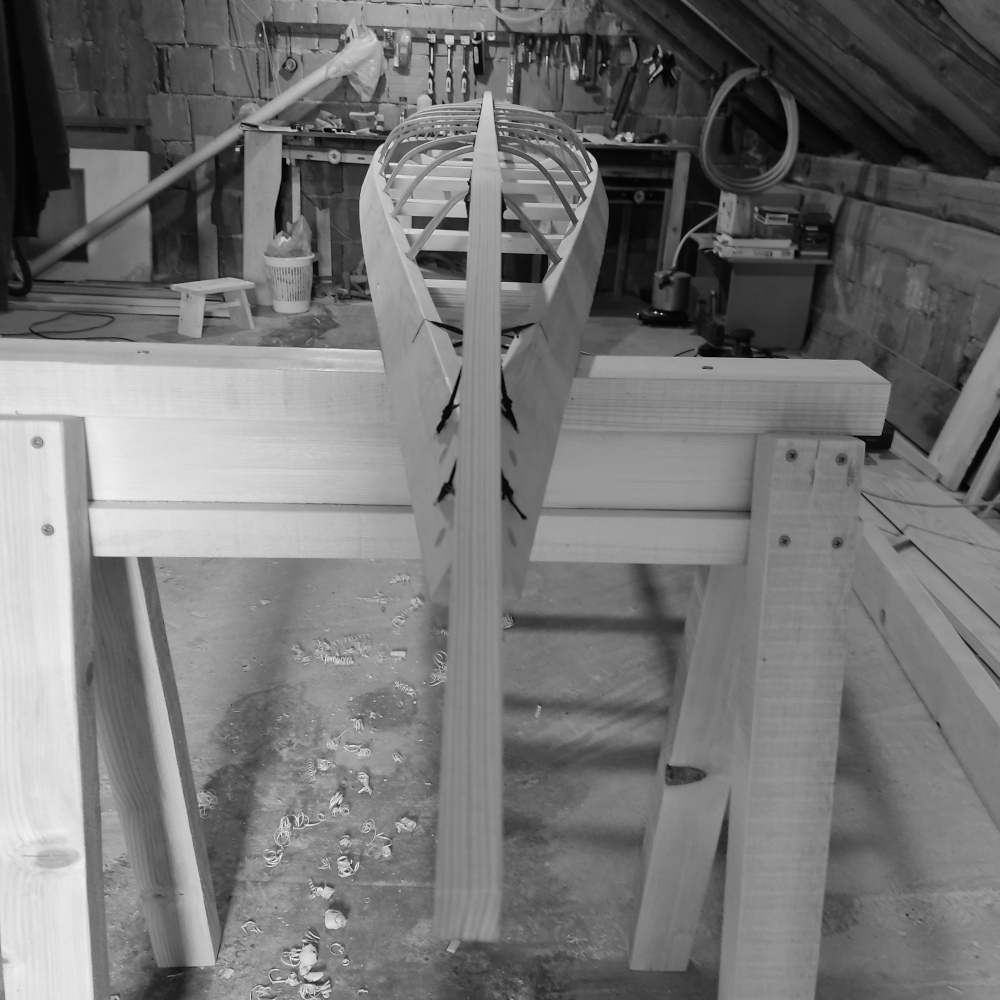
Deck finishing
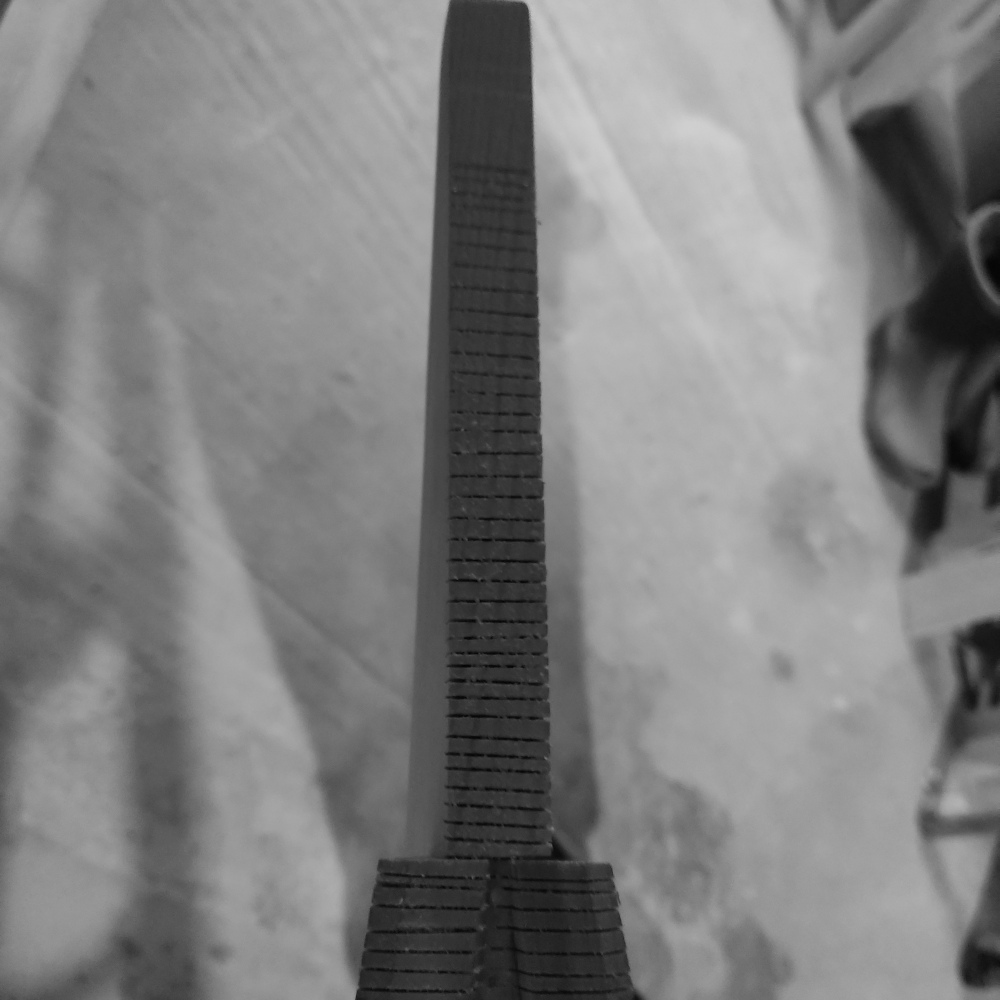
Stem plates. Where the gunwales meet the stems. Grooves are made (at correct depth) with the saw, and wood is removed with the chisel later. This top part is more in contact with the skin, so I like to make it from somewhat more rot-resistant wood in every case. I usually use oak or European larch for stem plates. The stem plate is pegged to gunwales/stem and shaped with a spokeshave.
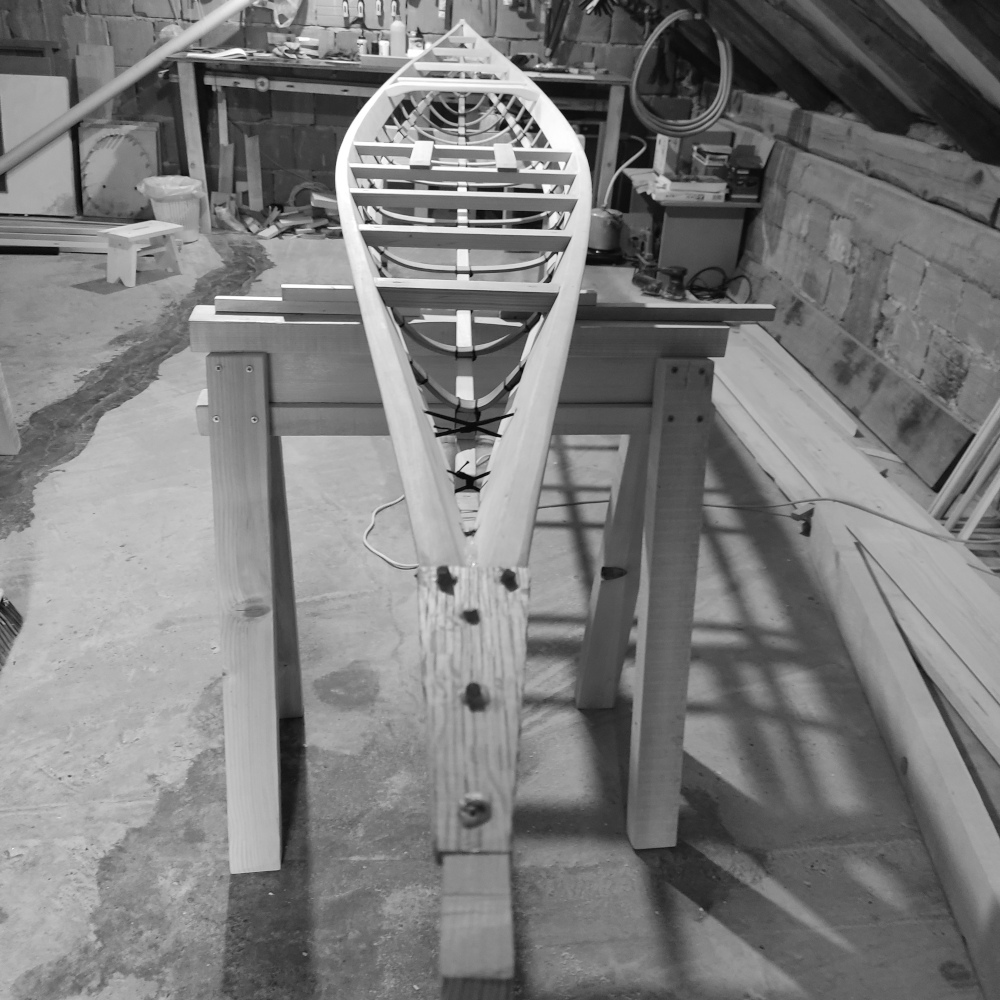
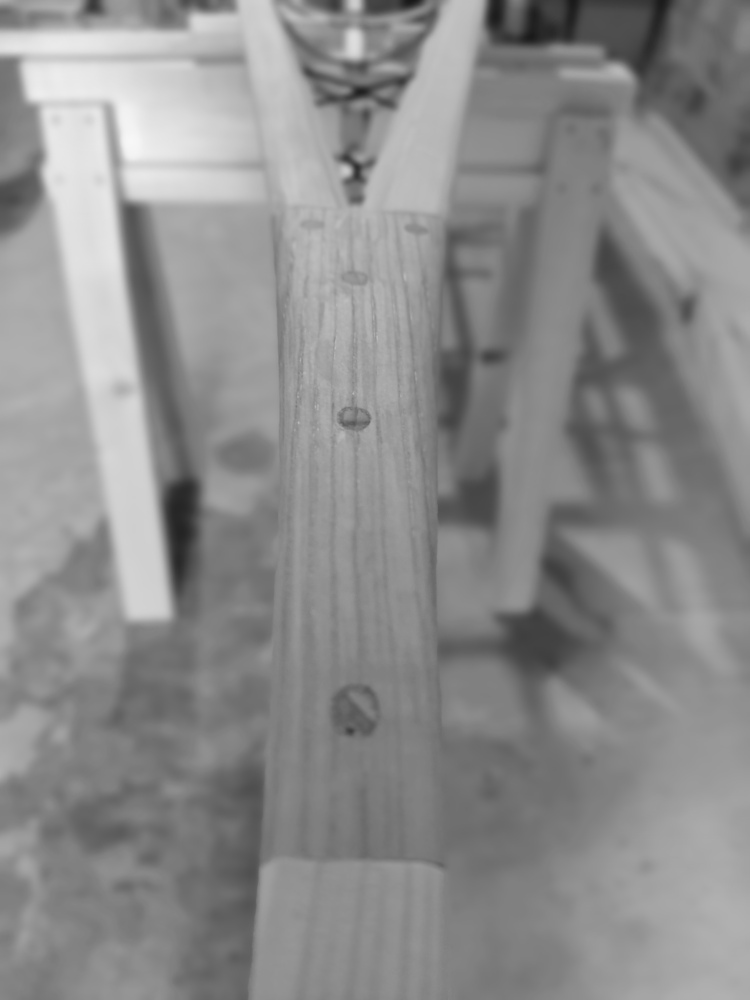
Masik. Curved deck beam which serves as thigh bracing. The front of the coaming comes in contact with it too. Flat-grained wood, especially soft wood, would be prone to splitting. I use ash for it, and I try to avoid flat grain, so I usually use vertical grain or slightly off vertical.
Masik height needs to be made for the paddler so there is good thigh bracing and also a wet exit can be made safely. There is an interesting part looking at the kayak that was my main influence. It had a little bit lower masik height actually, but it was canted forward for a roomier cockpit so the entrance was easier. This can be found in “Kayaks of Greenland” by Harvey Golden in the “Repairs and Modifications on Greenland Kayaks” chapter. I guess this is a modification added later. I did not use this modification but slightly increased masik height.
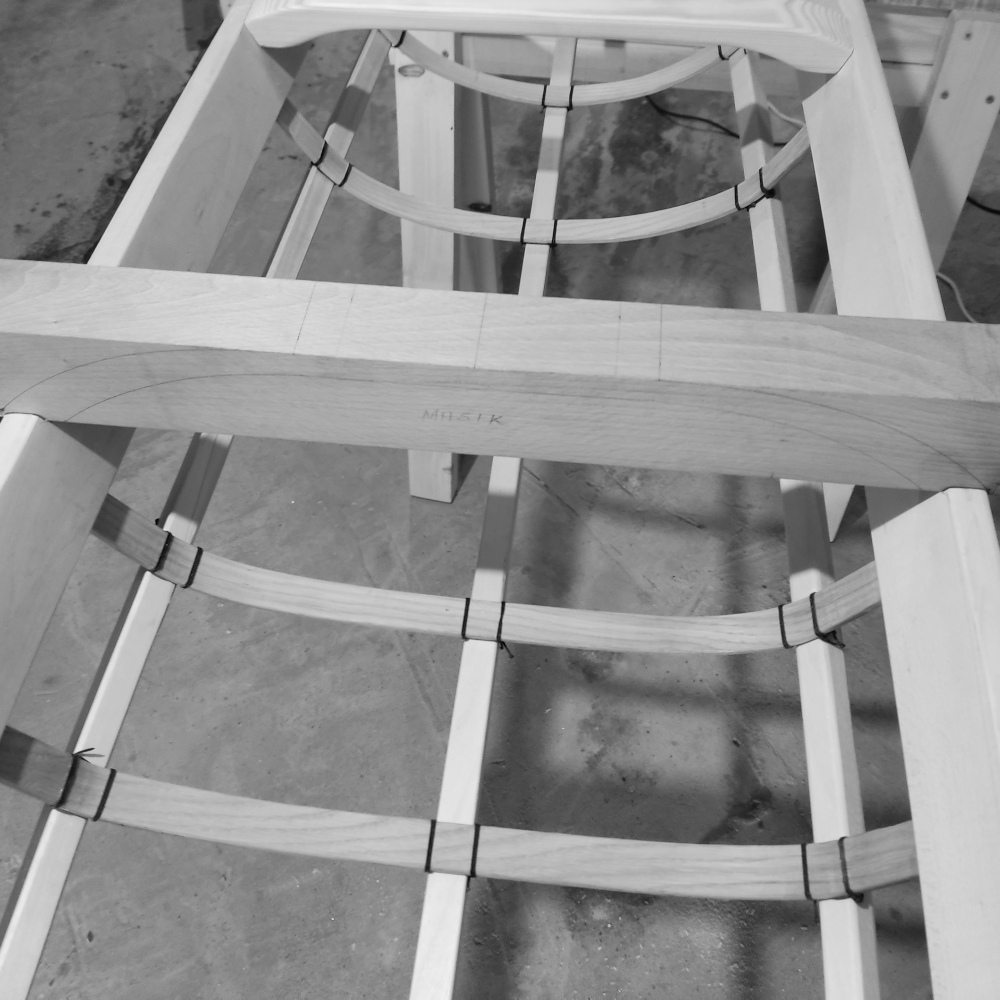
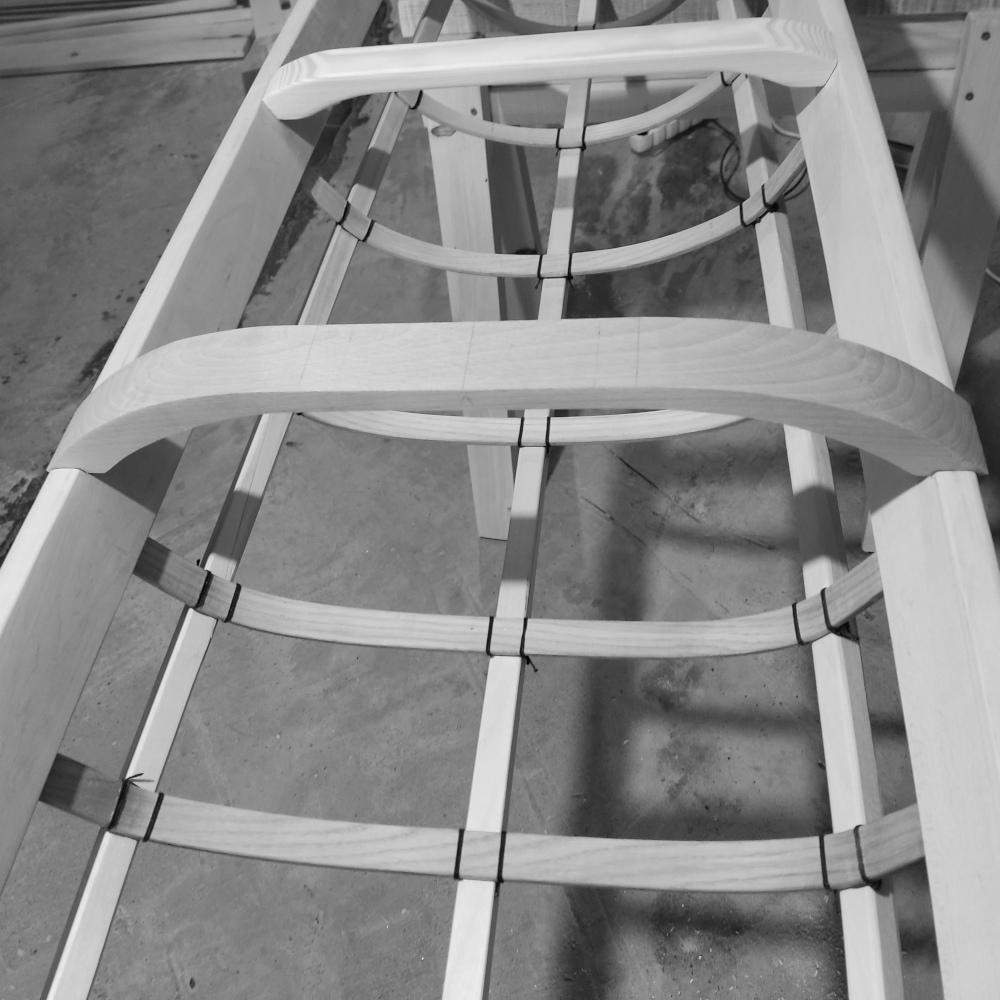
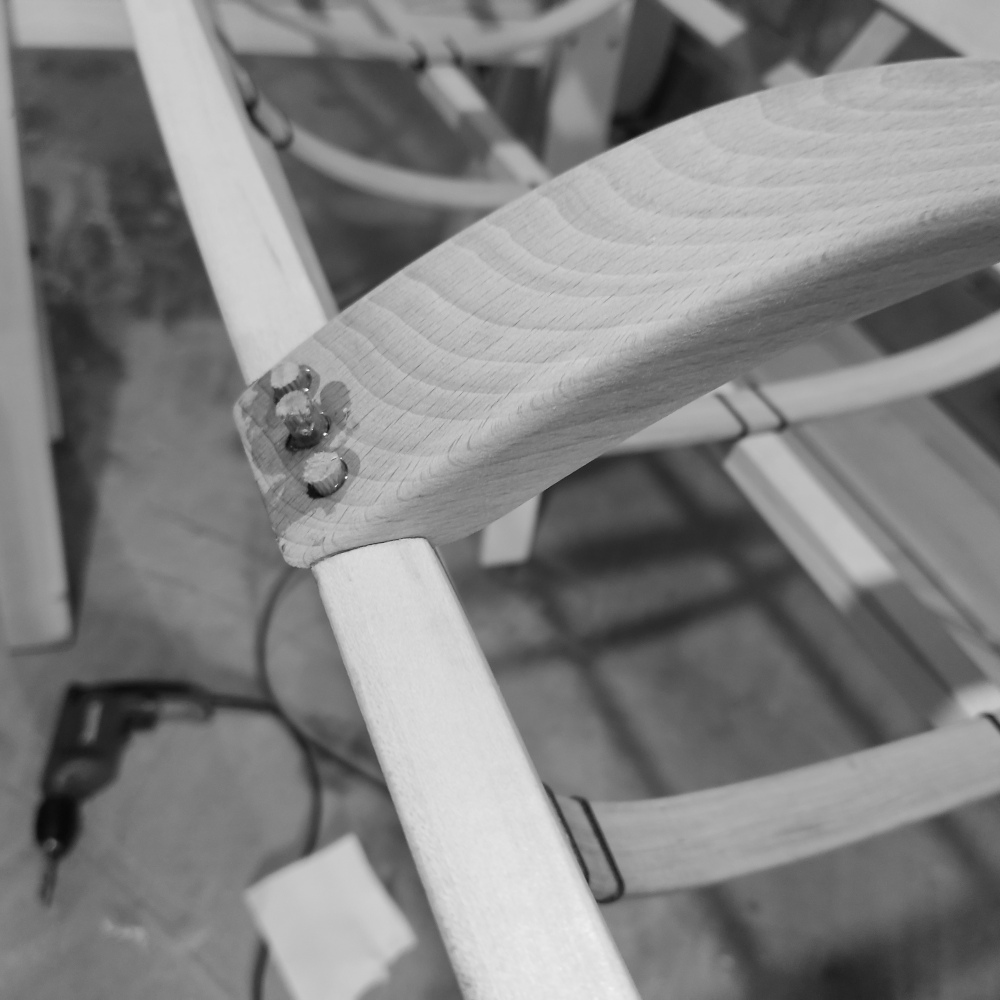
Setting up fore and aft deck ridges. This straight deck beam where fore stringers start is also the footrest, as I placed it in position for me. An additional straight deck beam is usually added for custom fit.
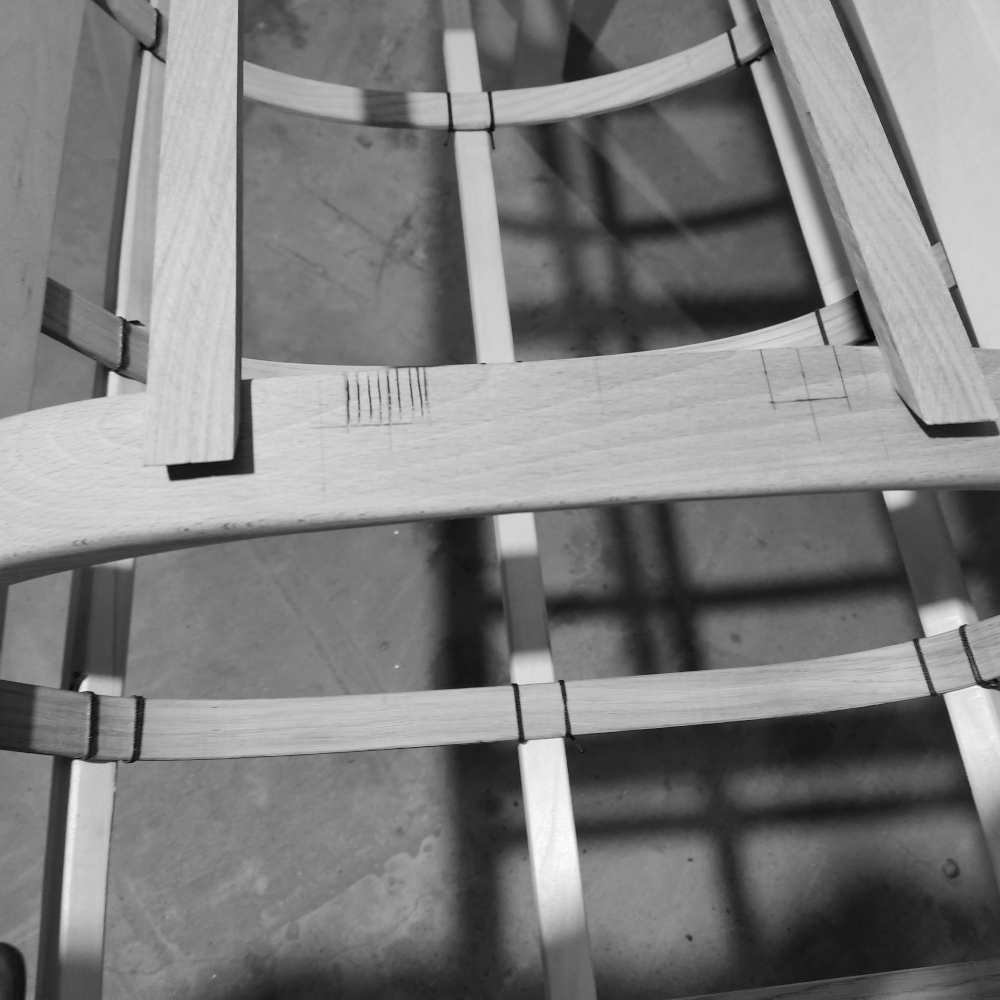
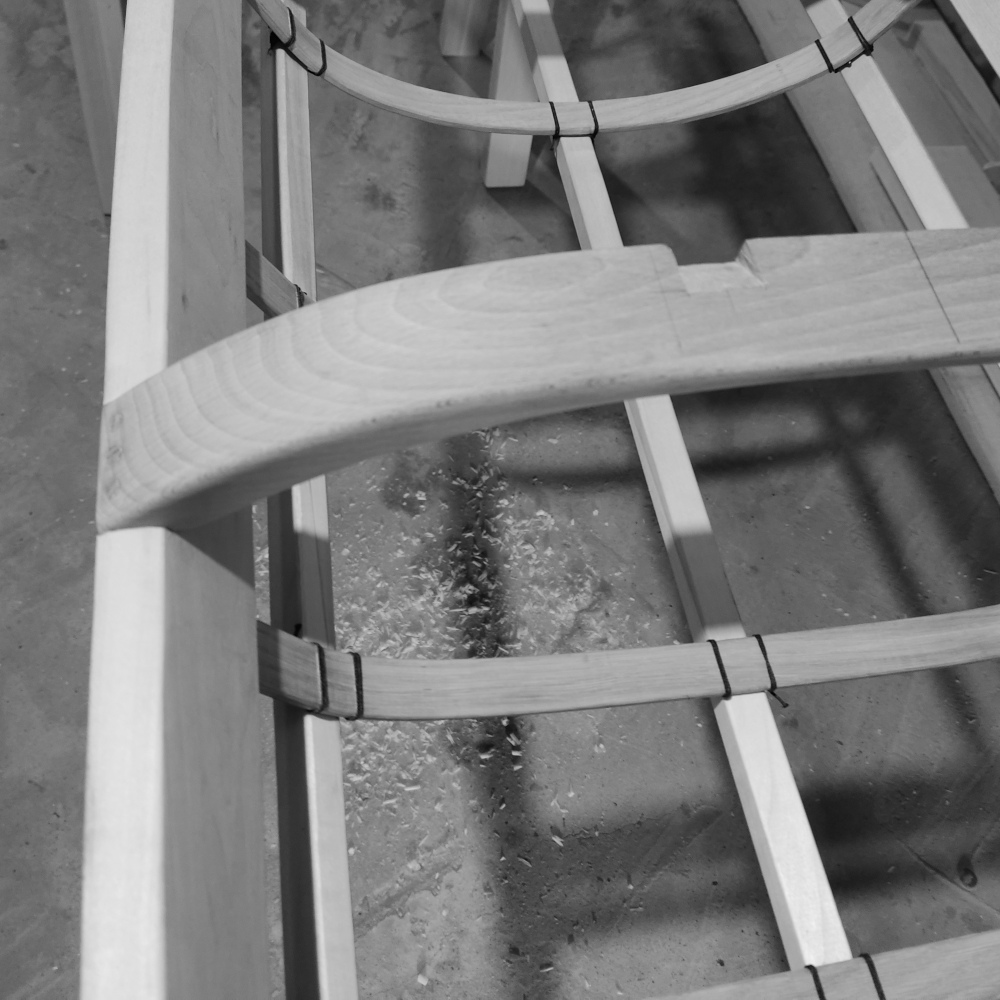
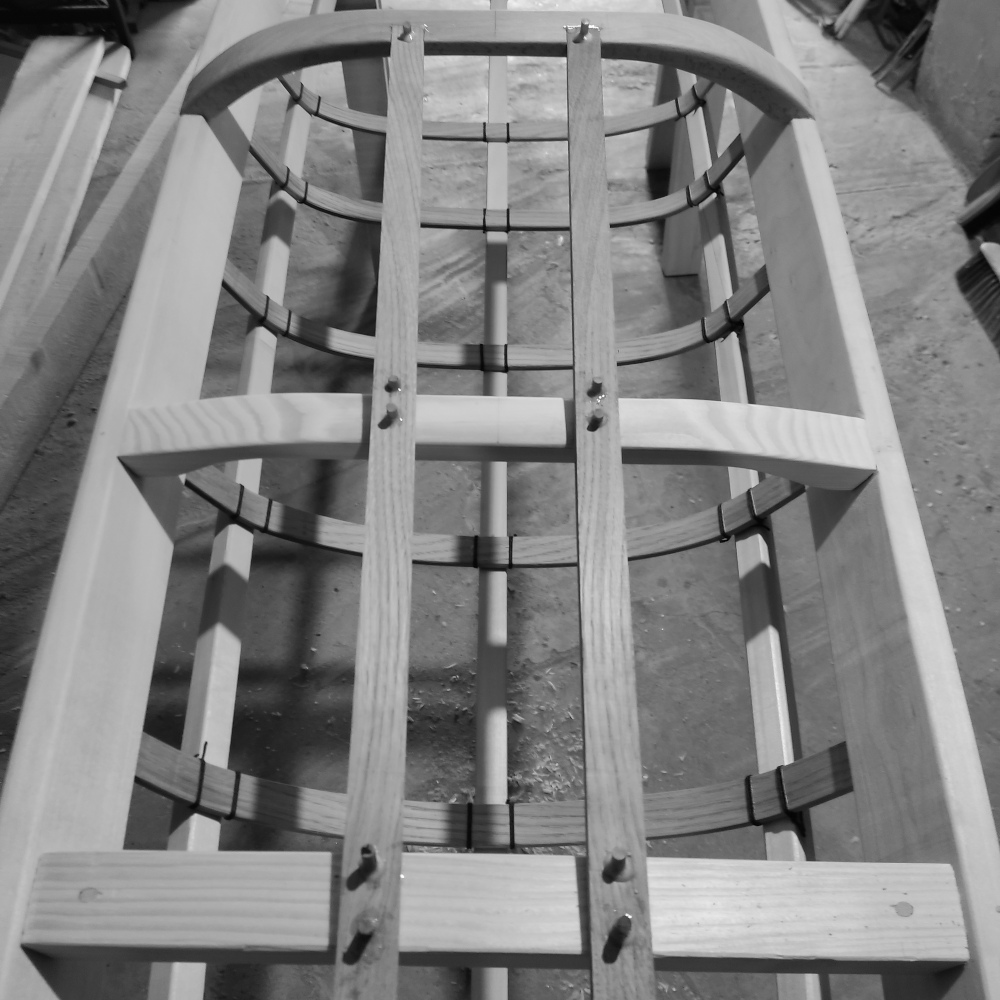
Some decking oil protection for the frame and tung oil for my paddles.
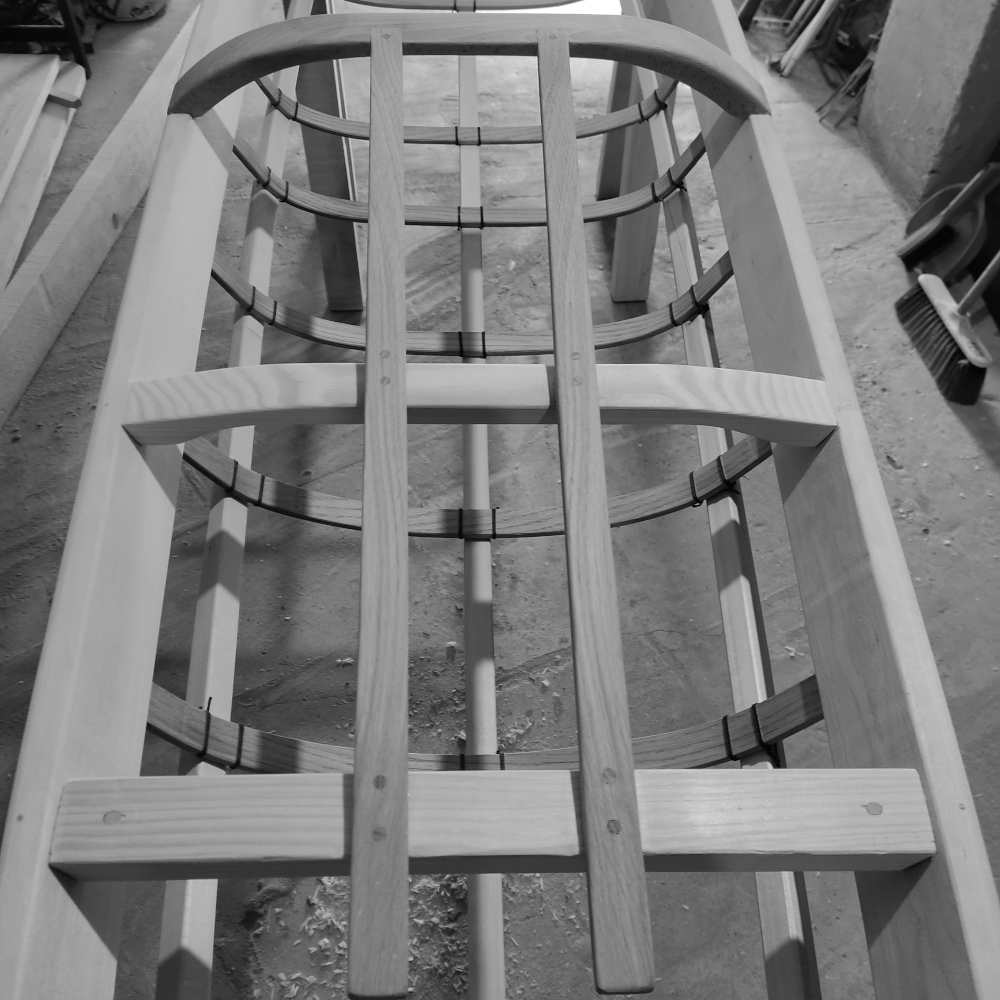
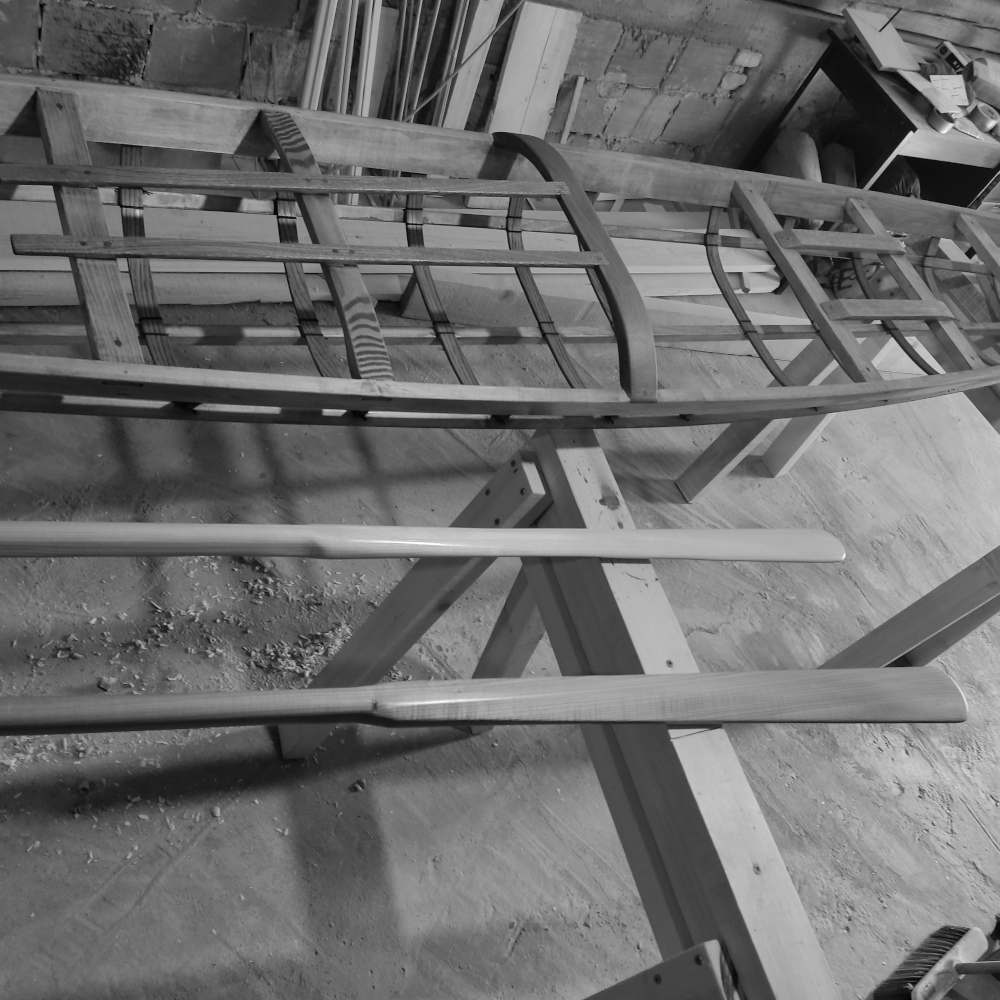
Finished frame
As I paddle mostly on the river Drava and lakes, I decided to go with a bit less bow rocker on this build. After my on-the-water tests, I realized it is more than enough tracking for me, so I increased it more on my later builds, as in the original drawings actually. I got a little more responsive kayak which will handle waves better in sea conditions. After all, it’s a sea kayak.
This kayak ended up being 15kg after skinning and coating. Weight is something I didn’t pay attention to on this build, as I was more focused on kayak shape. Later, I started to use European silver fir/Norway spruce for longitudinals, and with correct sizing I managed to get a kayak (LOA 520cm and 53cm beam) of 12kg. You could say I’m satisfied now. :)
I will probably cover the skinning and coating part in my next blogs.
West Greenland kayak details can be found in creations part.